
Crop Field Agrivoltaic Mounting System
Crop-field agrivoltaics should be designed around the farming operation as well as the PV array. Define crop rotation, machinery envelope, workable row width, headland space, irrigation/drainage, module geometry and structural loads before the elevated mounting structure is finalized.
- Active Crop Production
- Machinery Clearance
- Workable Row Width
- Light / Shade Coordination
- Site-Specific Foundation
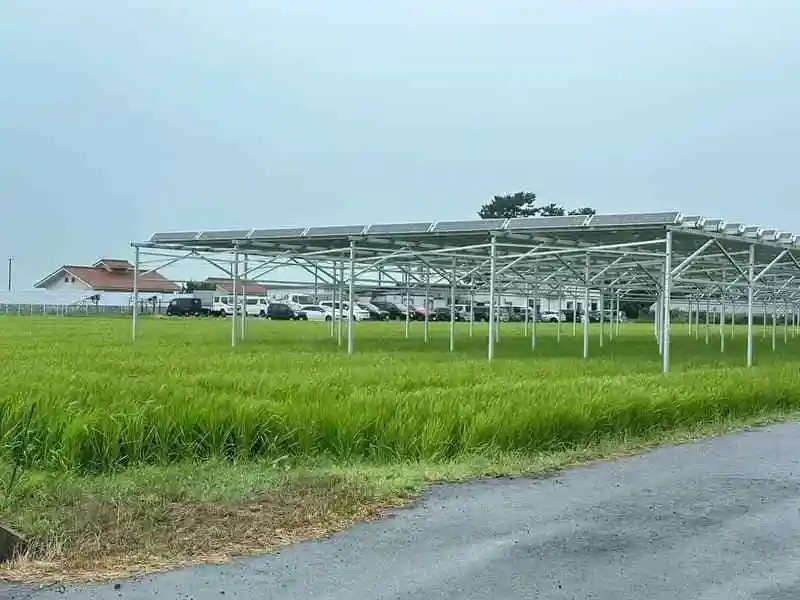
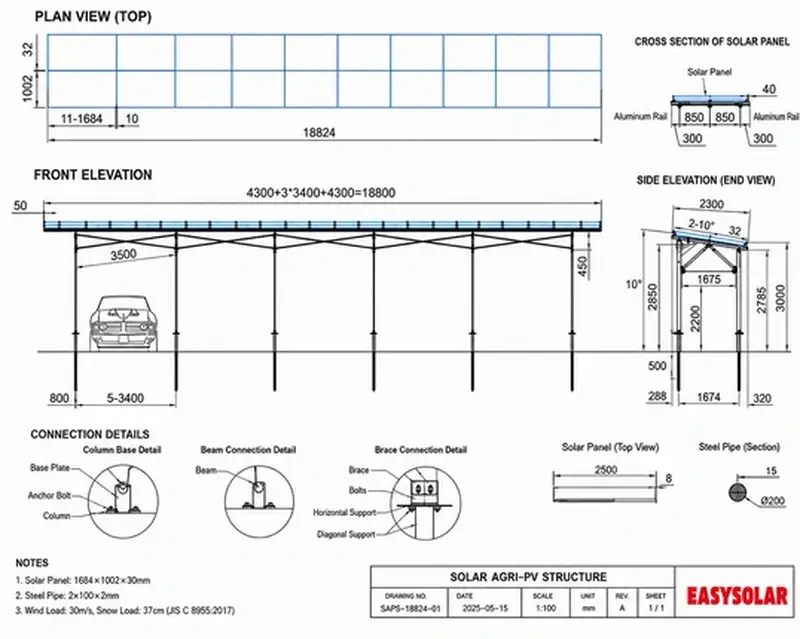
Elevated Agrivoltaics Is a Farm-and-Solar Co-Design Problem
Raising modules can preserve access beneath or between PV rows, but greater height and wider spacing also affect structural demand, foundation design, land-use efficiency and energy density. The agricultural operating plan therefore belongs in the structural brief from the beginning.
- Keep required farming activities available, not only the planted area.
- Set clear height from the actual machinery and implements expected on the field.
- Set row pitch from workable width, safety buffers, crop layout and light-distribution targets.
- Coordinate foundations and posts with cultivation, irrigation, drainage and field traffic.
Design Around the Full Farming Workflow
One tractor dimension is not enough. The layout should consider the operations and implements used across the planned crop rotation.
Crop & Rotation Plan
Crop types, row direction, seasonal rotation, planting/harvest method and any areas that must remain fully cultivable.
Machinery Envelope
Maximum machine height plus implement width, turning radius, headland needs and safe clearance from posts or module edges.
Water & Field Access
Irrigation routes, drainage, farm roads, maintenance corridors and any flood or wet-soil constraints.
Operations & Safety
Worker access, equipment movement, electrical clearances and the practical working space needed around structural members.
Use Height, Row Pitch and Module Layout as Project Variables
The mounting system can provide a chosen geometry, but it does not by itself prove that a crop will perform well under that shade pattern. Crop response depends on climate, crop variety, module density, orientation, season and the agronomic management plan.
- Set row pitch from both machinery access and the required crop/light strategy.
- Review module density, orientation and tilt against the energy model and agricultural objectives.
- Account for how module projection changes shade and usable machinery clearance.
- Do not label individual crops as “suitable” without project-specific agronomic evidence.
Useful Inputs for the Geometry Review
- Crop planCurrent and planned rotation
- Machine heightMaximum operating envelope
- Implement widthWorking width and passes
- HeadlandTurning and entry space
- Module layoutSize, orientation and density
- Light targetAgronomic / energy-study input
Verify the Complete Load Path for the Elevated System
Higher structures and wide operating spans can increase structural and foundation demand, so generic material or foundation formulas should be avoided.
Elevated Primary Structure
Columns, beams, purlins and bracing should be sized from the selected geometry, project loads and required farm clearances.
Module Support
Rails or purlins, clamps and module interfaces must match the selected PV module and structural design.
Foundation Interface
Driven pile, screw or concrete concepts are not automatically interchangeable; use only foundation types supported by the selected structure and geotechnical design.
Information Needed Before the Structure Is Finalized
| Agricultural plan | Crop rotation, crop-row direction, planting/harvest method, irrigation, drainage and field roads. |
|---|---|
| Machinery & headlands | Machine height, implement working width, turning radius, headland requirement and access routes. |
| PV array | Module model/dimensions, orientation, preliminary table layout, tilt or permitted operating geometry. |
| Site & geotechnical | Topography, soil/geotechnical information, groundwater/flood exposure, corrosion environment and construction access. |
| Structural design basis | Project location, governing standards and applicable wind, snow, seismic and other required design actions. |
| Agronomic / light criteria | Any crop-specific irradiance, shade or microclimate targets supplied by the agronomic or energy-design team. |
Use Project-Level Data Instead of Generic Crop Claims
| Clearance | Minimum and operating clearance checked against the actual machinery envelope and module geometry. |
|---|---|
| Workable row width | Net operating width after structural members and safety buffers, checked against farm implements and turning strategy. |
| Array architecture | Selected elevated fixed geometry or other approved system architecture; do not mix specifications between unrelated Agri-PV systems. |
| Materials & corrosion | Actual structural materials, coatings and fasteners specified for the selected design and exposure environment. |
| Foundation | Foundation product/interface and site capacity based on geotechnical information and structural reactions. |
| Project documents | Layout, structural information, foundation details, BOM and installation documentation within the agreed engineering scope. |
Send the Farm, Machinery and Module Information
Start with the crop/field plan and machinery envelope, then add the module datasheet, site conditions, structural design criteria and any agronomic light or shade targets.
- Crop rotation and field layout
- Machinery height, width and headland needs
- PV module datasheet and preliminary array
- Topography and geotechnical information
- Project structural design criteria
- Agronomic/light targets if available
Crop-Field Agrivoltaic Mounting Questions
How should clearance and row spacing be selected?
Use the full machinery and implement envelope, headland/turning needs, safety buffers, crop layout and the project's light/energy strategy rather than one generic height or row-spacing value.
Is one agrivoltaic layout suitable for every crop?
No. Crop response to shade and microclimate differs by crop, climate and management practice. The mounting geometry should follow project-specific agronomic and energy analysis.
What information is needed for a quotation?
Send the crop/field plan, machinery dimensions, module data, topography/site information, structural design criteria and any available geotechnical or agronomic requirements.