
Orchard Agrivoltaic Structure
Orchard agrivoltaics should be designed around the mature tree canopy and the full orchard workflow. Define tree-row geometry, pruning and harvest access, sprayer or platform clearance, irrigation, module/light strategy, structural loads and site conditions before the elevated PV structure is finalized.
- Mature Canopy Clearance
- Orchard Machinery Access
- Tree-Row Coordination
- Light / Shade Strategy
- Site-Specific Structure
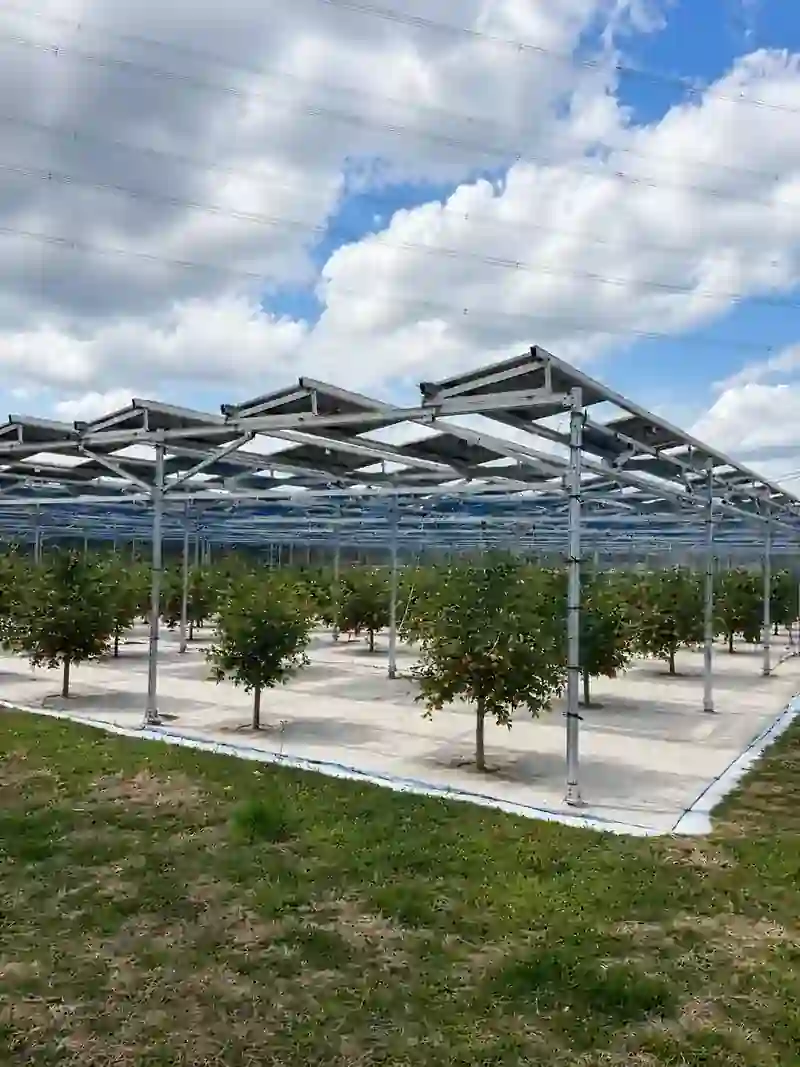
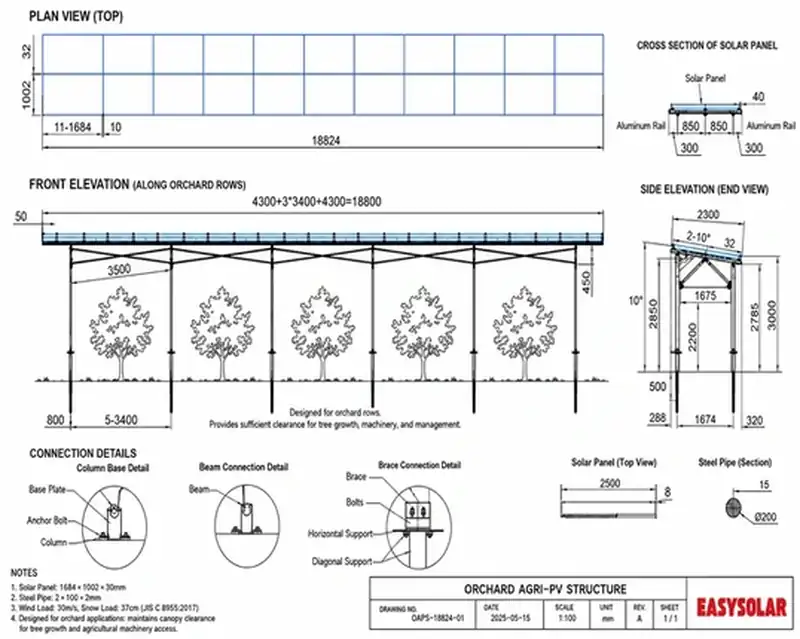
Orchard Agri-PV Is a Horticulture-and-PV Co-Design Problem
Elevated PV can share land with fruit production, but the mounting system changes the orchard's light, rain exposure, access and working envelope. The structure should therefore be developed from the orchard management plan together with the PV and structural design.
- Use the mature canopy dimensions, not only the current young-tree height.
- Keep pruning, spraying, thinning, harvest and maintenance routes workable.
- Coordinate posts and foundations with tree rows, irrigation and orchard traffic.
- Define the PV/light strategy before fixing array height, coverage and orientation.
Design Around the Work Performed Through the Life of the Orchard
The critical clearance is the space needed for mature trees, machinery and orchard operations—not one generic panel height.
Tree & Canopy Plan
Tree-row direction, spacing, training system, expected mature height/width and planned pruning envelope.
Machinery & Platforms
Tractors, sprayers, harvest platforms or other equipment, including height, width, turning space and safe clearance.
Irrigation & Orchard Services
Irrigation lines, frost or crop-protection equipment, drainage, farm roads, utility routes and maintenance access.
Long-Term Access
Space for pruning, thinning, harvest, module service and replacement without blocking the orchard's operating lanes.
Do Not Promise Fruit Performance from the Mounting Structure Alone
Module coverage, transparency, orientation and tracking strategy can change orchard irradiance and microclimate. They can also influence exposure to hail, heavy rain or excessive sun, but the horticultural outcome depends on the fruit variety, climate, orchard system and management strategy.
- Define the target light or protection function with the agronomic design team.
- Review module coverage, transparency and row geometry against the orchard's light requirement.
- Use fixed or tracking geometry only where the selected system and project analysis support it.
- Do not market one structure as universally suitable for apples, cherries, pears, citrus or other fruit crops.
Useful Inputs for the Light Review
- Fruit / cultivarProject horticultural input
- Canopy systemHeight, width and training geometry
- Module coveragePV area above the orchard
- TransparencyIf semi-transparent modules are used
- PV motionFixed or tracking architecture
- Protection targetShade, hail or rain objective if required
Verify the Elevated Load Path and Orchard Interface
Greater height and orchard clearance can increase structural and foundation demand, so dimensions and foundation types must remain project-specific.
Elevated Primary Structure
Posts, columns, beams, purlins and bracing should be sized from the selected PV geometry, structural loads and required orchard clearance.
Module Support
Rails or purlins, clamps and module interfaces must match the selected module and the fixed or tracking architecture.
Foundation Interface
Driven-pile, screw or concrete concepts are not automatically interchangeable; use only the foundation route supported by the selected structure and geotechnical design.
Information Needed Before the Orchard Structure Is Finalized
| Orchard plan | Tree-row direction and spacing, planting distance, canopy/training system, mature canopy size and planned orchard life. |
|---|---|
| Operations & machinery | Pruning, spraying and harvesting method plus machine/platform dimensions, turning needs, roads and access routes. |
| PV architecture | Module model, dimensions, coverage, fixed/tracking concept, transparency if applicable and preliminary array geometry. |
| Site & geotechnical | Topography, soil/geotechnical information, groundwater, irrigation/drainage, corrosion environment and construction access. |
| Structural design basis | Project location, governing standards and applicable wind, snow, seismic and other required design actions. |
| Horticultural criteria | Any target irradiance, shade, rain/hail protection or microclimate requirements supplied by the orchard/agronomic team. |
Use Project-Level Data Instead of Generic Orchard Claims
| Clearance | Minimum and operating clearance checked against mature canopy geometry, machinery, platforms and module movement where applicable. |
|---|---|
| Post & row layout | Structural supports coordinated with orchard rows, irrigation, roads and the working width required for orchard operations. |
| PV geometry | Fixed or tracking architecture, module coverage, orientation and tilt/motion range based on project-specific energy and horticultural analysis. |
| Materials & corrosion | Actual structural materials, coatings and fasteners specified for the selected design and exposure environment. |
| Foundation | Foundation product/interface and site capacity based on geotechnical information and structural reactions. |
| Project documentation | Layout, structural information, foundation details, BOM and installation/maintenance documentation within the agreed engineering scope. |
Send the Orchard, Machinery and Module Information
Start with the orchard plan and mature canopy geometry, then add machinery/platform dimensions, the module datasheet, site conditions, project design criteria and any horticultural light or protection targets.
- Orchard layout and mature canopy dimensions
- Machinery / platform height and working width
- PV module datasheet and preliminary array
- Topography and geotechnical information
- Project structural design criteria
- Light, shade or crop-protection targets if available
Orchard Agrivoltaic Structure Questions
How should the PV height be selected in an orchard?
Use mature canopy height together with pruning, spraying, harvest equipment, platform/machinery clearance and the selected PV architecture rather than one universal panel height.
Is one orchard Agri-PV layout suitable for every fruit crop?
No. Fruit response to shade, rain protection and microclimate depends on the cultivar, climate, orchard system and management practice. Use project-specific horticultural analysis.
What information is needed for a quotation?
Send the orchard layout, mature canopy dimensions, machinery/platform data, module information, site/geotechnical inputs, structural criteria and any light or crop-protection requirements.