
Livestock & Pasture Solar Mounting
Livestock-compatible PV should be selected from the animal, grazing plan and solar architecture together. Confirm panel-edge clearance, protected wiring, gates and fencing, water access, animal movement, vegetation management, structural loads and site conditions before treating an array as grazing-ready.
- Sheep Grazing
- Purpose-Designed Cattle PV
- Protected Wiring
- Gates / Water / Access
- Site-Specific Structure
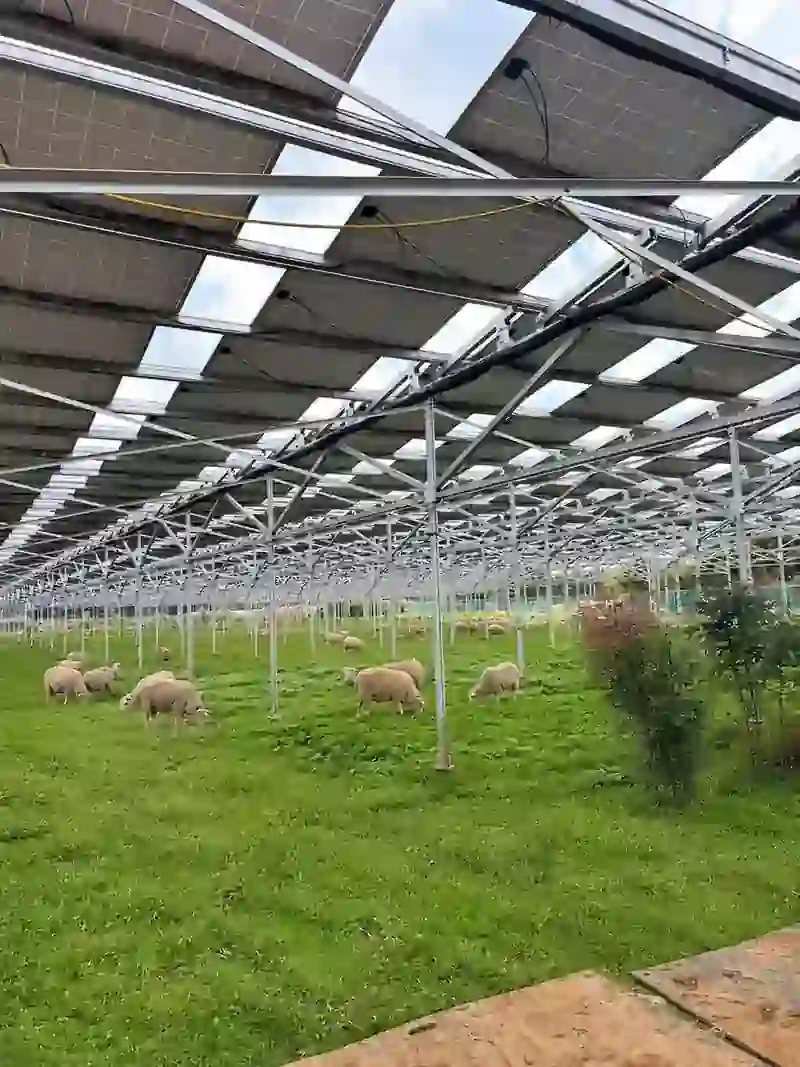
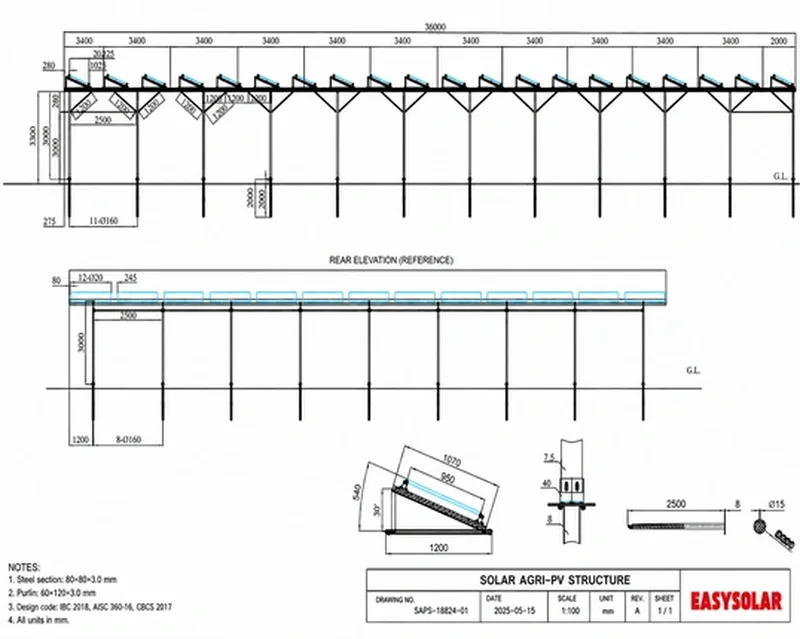
Pasture structure logic
Coordinate panel clearance, protected electrical equipment, animal routes, gates, water points and maintenance access.
Solar Grazing Is Not One Universal Racking Type
Some sheep-grazing projects can use conventional utility-scale PV with limited changes. Larger livestock, especially cattle, can require greater clearance, stronger protection of equipment and a purpose-designed array geometry. The livestock plan therefore needs to be part of the solar design brief.
- Define the animal species, class, size and grazing management plan.
- Check the lowest module edge and all moving positions if a tracker is used.
- Protect cables, connectors and other electrical equipment from animal contact.
- Coordinate gates, fencing, water points and service roads with the array layout.
Match the Array to the Animal Instead of Using One Generic Clearance
Current practice is strongest for sheep. Cattle-compatible systems are developing, while goats require additional caution around equipment.
Sheep Grazing
Many standard ground-mounted arrays can accommodate sheep, provided wiring, fencing, vegetation, water and safe access are planned for grazing operations.
Cattle-Compatible PV
Cattle generally need a purpose-designed layout with greater clearance and equipment protection. Panel height, spacing and animal-welfare requirements should be verified for the actual project.
Goats & Other Livestock
Do not assume compatibility. Climbing, browsing or chewing behavior can create risks to modules and wiring, so the animal and protection strategy must be reviewed explicitly.
Design the Working Site, Not Only the Space Under the Modules
Grazing Plan
Stocking approach, rotation, forage management, rest areas and the seasonal periods when livestock will enter the solar site.
Fencing & Gates
Perimeter fencing, internal paddocks, gate widths, livestock handling and access for farm and O&M vehicles.
Water & Ground Conditions
Water points, drainage, mud-prone areas, erosion, forage establishment and locations that need to remain accessible.
Electrical Protection
Conduits, cable loops, connectors, combiner equipment and other components kept out of reach or mechanically protected.
Check the Lowest Operating Position, Not Just the Post Height
Livestock clearance depends on the complete module envelope. Fixed-tilt arrays have a low and high edge; trackers can move through a range of positions. Animal access, module reach, pinch/crush zones and service access therefore depend on the selected architecture.
- Measure minimum module-edge clearance in the actual operating geometry.
- For trackers, review the full rotation envelope and livestock-control strategy.
- Keep posts, braces and exposed foundation details compatible with animal movement.
- Reserve safe maintenance zones so people and livestock are not competing for the same access path.
Inputs for the Clearance Review
- AnimalSpecies, size and class
- PV systemFixed or tracking
- Low edgeMinimum operating clearance
- MovementTracker envelope if applicable
- AccessGates, lanes and service routes
- ProtectionWiring and equipment barriers
Treat Shade as a Potential Benefit, Not a Guaranteed Livestock Outcome
PV can provide shade, but the effect depends on climate, animal type, stocking, forage and site management.
Shade Availability
Panel geometry can create shaded zones, but their location and duration change with sun angle and tracker position.
Forage & Soil
Shade, rainfall redistribution, trampling and stocking management can alter forage and ground conditions below the array.
Animal Management
Water, fencing, handling, stocking rate and welfare practices remain livestock-management responsibilities, not properties of the racking alone.
Verify the Load Path and Animal-Contact Risks Together
Higher cattle-compatible arrays or special tracker configurations can change structural and foundation demand.
Primary Structure
Posts, beams, braces and tracker components should be designed for project loads plus any relevant animal-contact or operational requirements.
Equipment Protection
Route and protect electrical and moving components so normal livestock behavior does not create a foreseeable damage or welfare hazard.
Foundation Interface
Driven-pile, screw or concrete concepts are not automatically interchangeable; use only the foundation route supported by the selected structure and geotechnical design.
Information Needed Before a Grazing-Ready Layout Is Finalized
| Livestock plan | Species, animal size/class, stocking and rotation approach, grazing season and handling requirements. |
|---|---|
| Pasture layout | Fences, gates, paddocks, water points, roads, drainage, forage areas and O&M access. |
| PV architecture | Fixed or tracking system, module geometry, minimum edge clearance, row spacing and movement envelope where applicable. |
| Electrical / safety | Wire management, connectors, equipment enclosures, barriers and any animal-contact protection required by the selected system. |
| Site & geotechnical | Topography, soils, drainage/flood exposure, corrosion environment, access and foundation information. |
| Structural design basis | Project location, governing standards and applicable wind, snow, seismic and other required design actions. |
Use Livestock- and System-Specific Design Data
| Livestock compatibility | Animal species and management plan checked against the selected PV system rather than a generic “pasture-friendly” claim. |
|---|---|
| Clearance | Minimum module-edge and equipment clearances verified in all relevant fixed or tracker operating positions. |
| Electrical protection | Cables, connectors and equipment located or enclosed to reduce foreseeable animal contact. |
| Structure & materials | Actual structural members, coatings, fasteners and protection details specified for the design and environment. |
| Foundation | Foundation product/interface and site capacity based on geotechnical information and structural reactions. |
| Project documentation | Layout, structural information, grazing interfaces, foundation details, BOM and installation/maintenance documents within the agreed scope. |
Send the Livestock, Pasture and PV Information
Start with the animal and grazing plan, then add fences/gates/water points, the PV architecture, module data, site information and project structural criteria.
- Animal species, size and grazing plan
- Fencing, gates, water points and service routes
- PV architecture and module datasheet
- Required minimum operating clearance
- Topography and geotechnical information
- Project structural design criteria
Livestock & Pasture Solar Questions
Can sheep graze under standard ground-mounted solar arrays?
Often yes, but the site still needs suitable panel clearance, protected wiring, forage, fencing, water, gates and a workable grazing/O&M plan.
Can the same array be used for cattle?
Not necessarily. Cattle commonly require greater clearance and more deliberate protection of modules, electrical equipment and structural components, so the array should be designed and reviewed specifically for cattle use.
Are goats handled the same way as sheep?
No. Goats can climb and browse equipment and may chew wiring, so their use around PV requires a different risk assessment and protection strategy.
What information is needed for a quotation?
Send the livestock and grazing plan, pasture layout, fences/gates/water points, PV architecture, module data, site/geotechnical information and structural design criteria.