
Solar Mounting L Feet & Hanger Bolts
Easy Solar supplies solar mounting L feet and hanger bolts for corrugated, trapezoidal and selected pitched metal roof PV systems. Aluminum L-foot brackets, stainless steel hanger bolts, EPDM sealing parts, rail connection hardware and project-specific mounting kits are available for installers, EPC contractors, distributors and OEM buyers.
- Aluminum L Feet
- Hanger Bolt Kits
- Metal Roof Applications
- EPDM Sealing Parts
- OEM & Bulk Supply
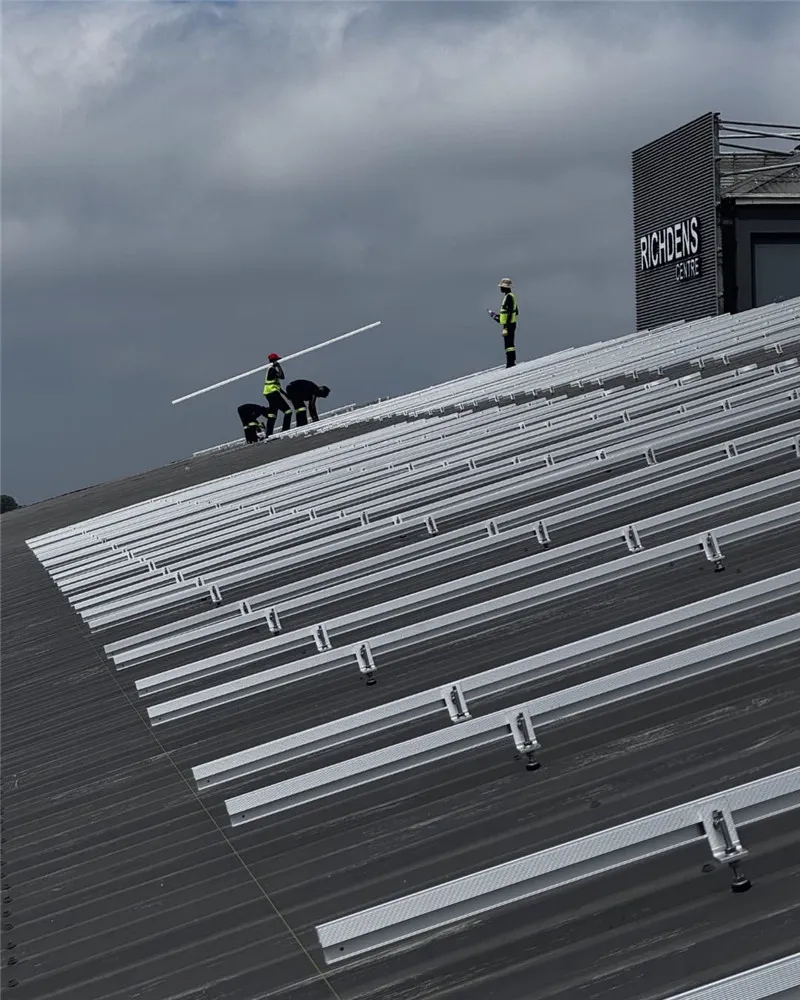
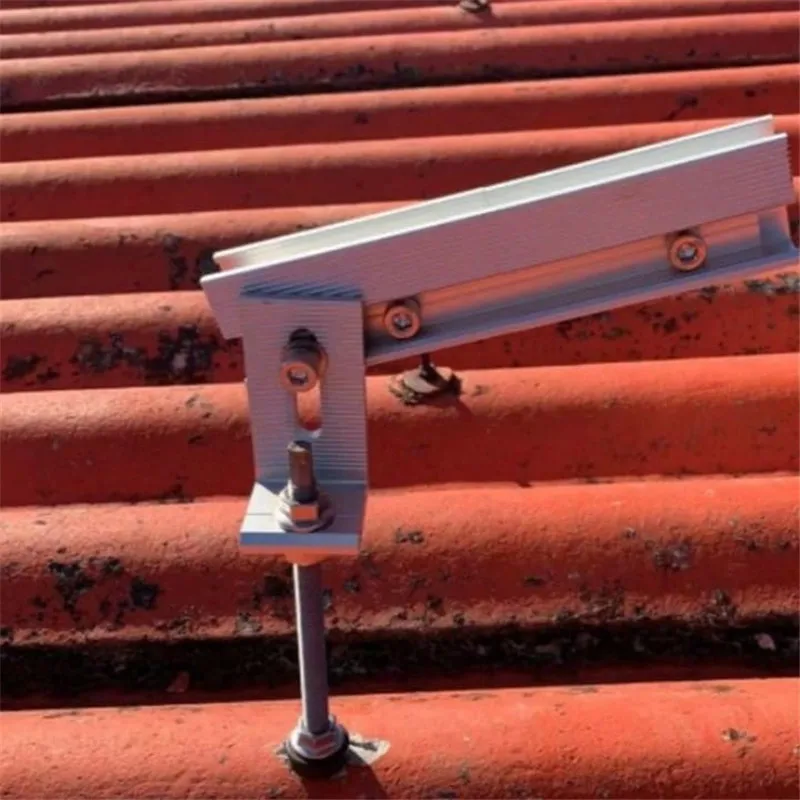
Aluminum L Foot for Roof Solar Mount Systems
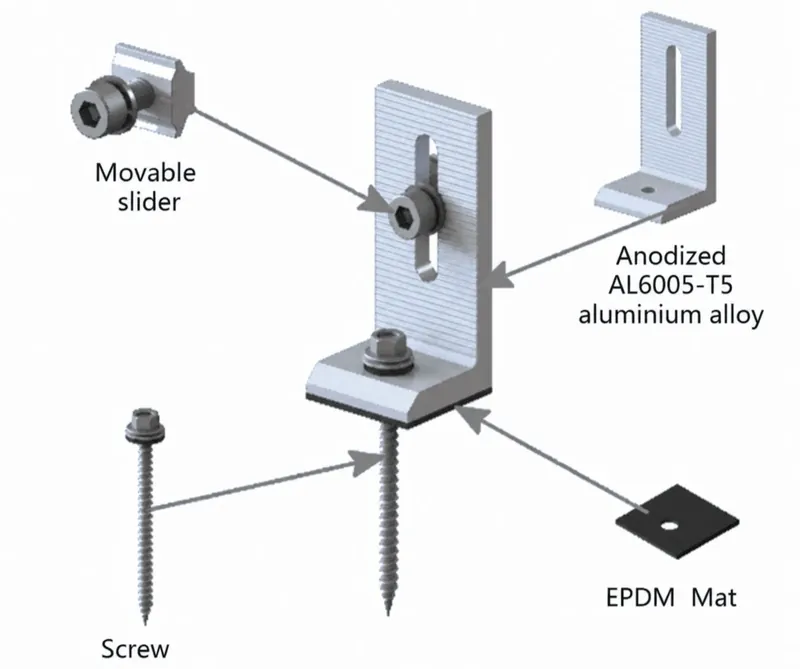
An aluminum L foot for roof solar mount systems creates a connection point between a solar mounting rail and the roof attachment below it. The vertical leg supports the rail connection, while the horizontal base connects to a compatible roof screw, hanger bolt, flashing interface or other approved attachment.
Hanger bolt assemblies are commonly used where the fixing must pass through a roof covering and connect to a suitable supporting member below. The complete set may include the hanger bolt, nuts, washers, sealing components, adapter plate or L foot and rail connection hardware.
- Solar mounting L feet for rail-based metal roof PV systems
- Hanger bolt assemblies for suitable roof and substructure conditions
- Compatible options for corrugated, trapezoidal and selected pitched roofs
- Custom height, holes, slots, bolt lengths and connection parts
Solar Mounting L Feet and Hanger Bolt Options
Select the attachment configuration according to roof profile, supporting structure, rail interface, required adjustment and weather-sealing detail.
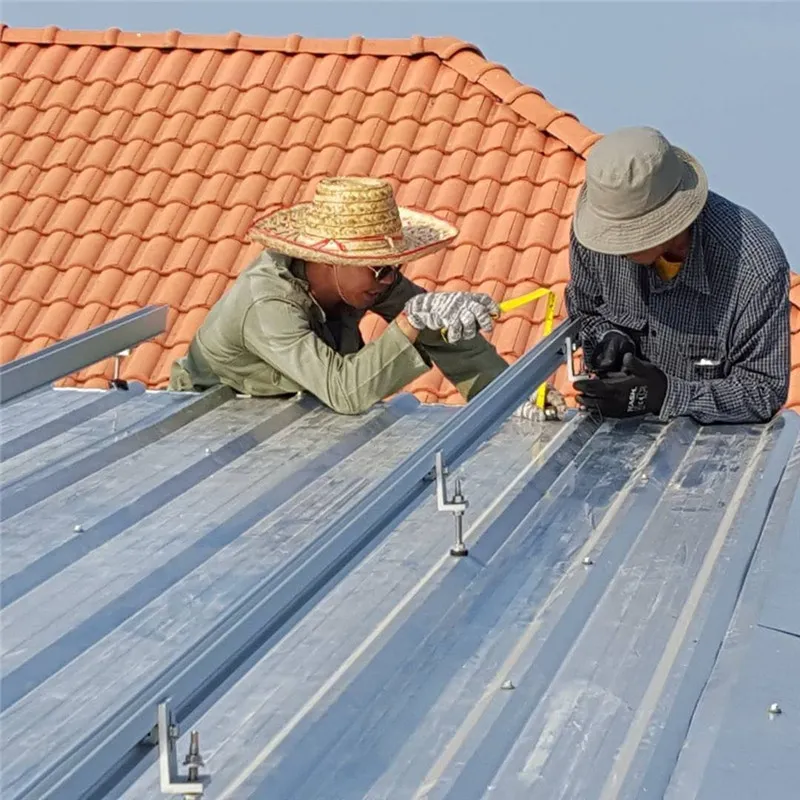
Standard Solar Mounting L Feet
Aluminum L feet with round or elongated holes for connecting compatible mounting rails to selected roof screws, brackets or attachment bases.
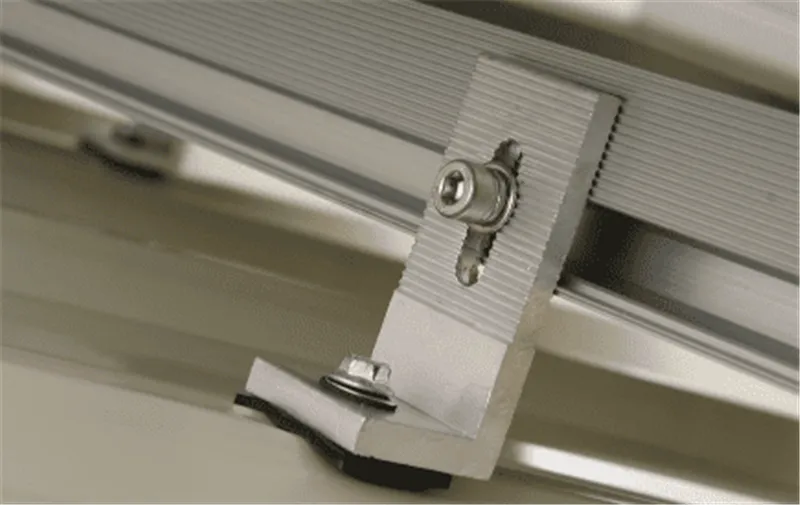
L Foot with Hanger Bolt
Hanger bolt and L-foot sets for suitable metal or selected roof constructions, connecting the supporting member below the roof to the rail above.
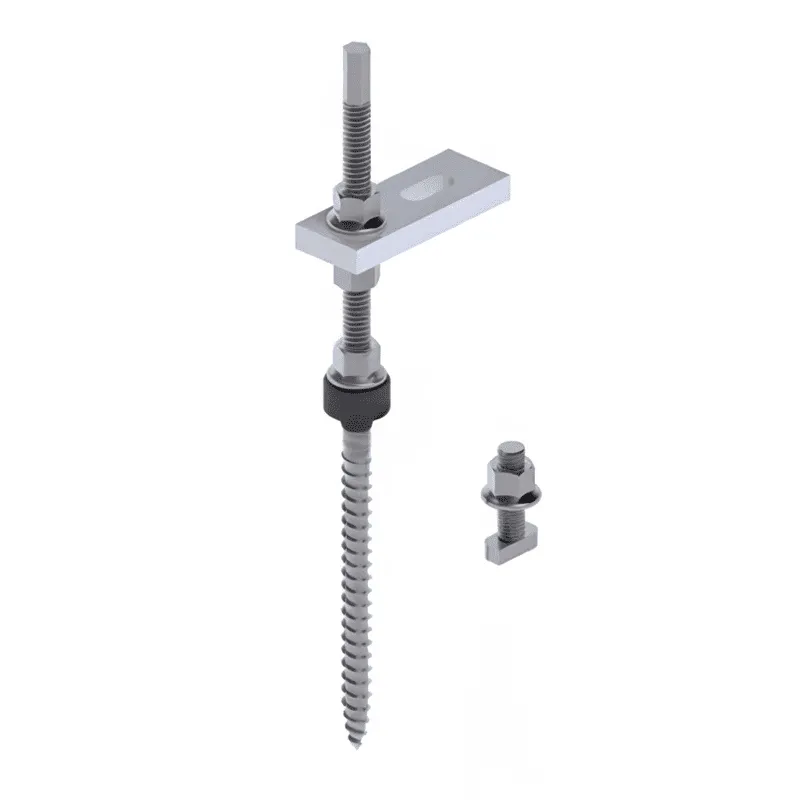
Hanger Bolts with Adapter Plates
Adapter plates provide a rail or bracket connection point above the hanger bolt and may allow limited positioning adjustment during installation.
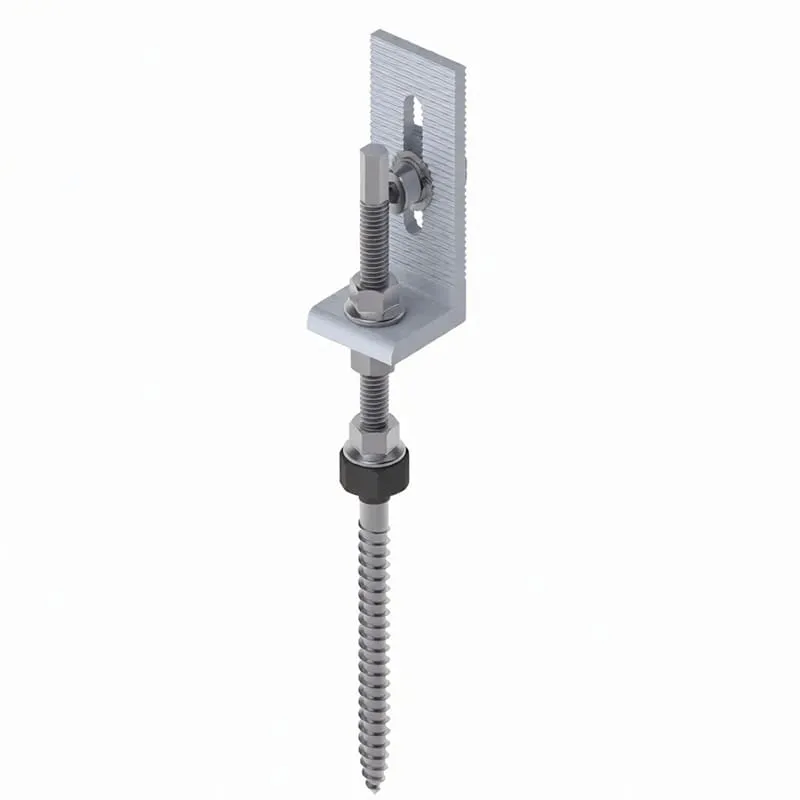
Adjustable Solar L Feet
Slotted L-foot designs can provide a defined adjustment range for rail height, bolt position or alignment, subject to the confirmed installation design.
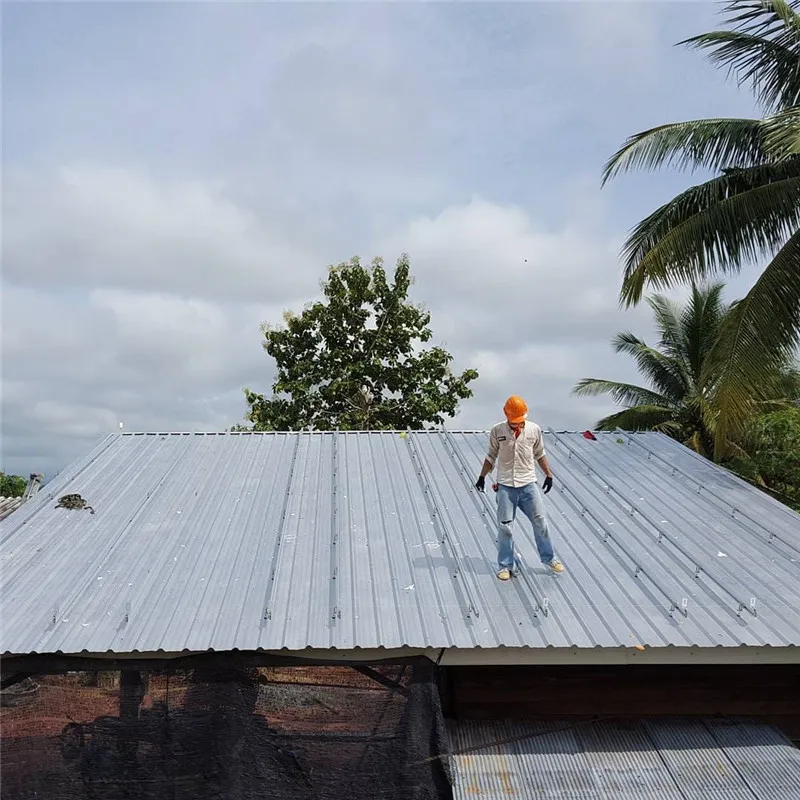
L Feet with Roof Screws
L-foot sets with compatible roof screws, washers and sealing parts for selected metal roof profiles and approved fixing locations.
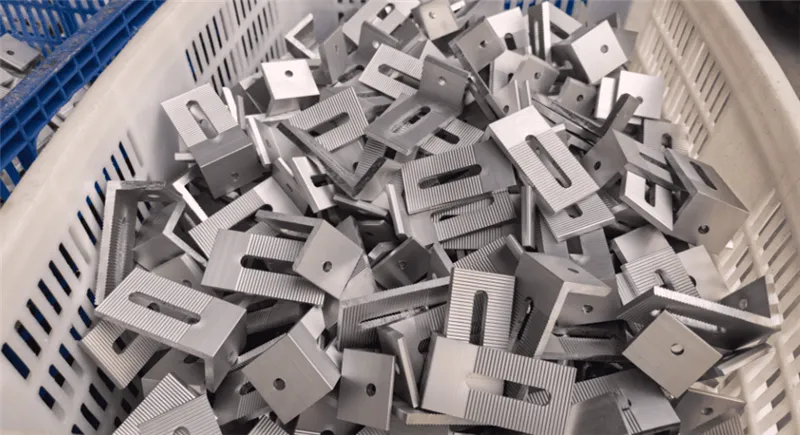
Custom L Feet and Bolt Kits
Drawing-based L feet, adapter plates, hanger bolts, washers, nuts and packaging sets can be discussed for OEM and project-specific requirements.
Solar Mounting L Foot vs Hanger Bolt
The two parts often work together, but they perform different functions within the roof attachment.
| Comparison | Solar Mounting L Foot | Hanger Bolt |
|---|---|---|
| Main Function | Provides the bracket interface between the roof attachment and the solar mounting rail | Creates a threaded fixing between a suitable supporting member and the hardware above the roof |
| Typical Position | Installed above the roof surface or on an approved attachment base | Passes through the roof covering and connects to the supporting member below where specified |
| Adjustment | May include elongated slots for rail height or connection adjustment | Threaded nuts and adapter hardware may provide a defined positioning range |
| Sealing Interface | Depends on the roof attachment, base, flashing or screw configuration | Commonly paired with sealing washers or EPDM components according to the assembly design |
| Rail Connection | Connects directly to compatible rail hardware | Usually connects to the rail through an L foot or adapter plate |
Solar L Feet Roof Mounting for Metal Roof Profiles
Roof geometry, sheet thickness, fixing location, supporting member and weather-sealing detail must be reviewed before selecting the L foot or hanger bolt assembly.
Corrugated Metal Roof
L-foot and hanger-bolt options matched to corrugation shape, fixing point and supporting structure.
View Corrugated Roof Mounting →Trapezoidal Metal Roof
Rail attachment options for selected trapezoidal profiles, roof screws or hanger-bolt assemblies.
View Trapezoidal Roof Mounting →Pitched Metal Roof
L feet and hanger bolts for selected pitched metal roof systems with compatible rails and fasteners.
View Metal Roof Systems →Custom Roof Conditions
Project review for roof profile, substructure, rail position, sealing method and installation layout.
View Roof Mounting Systems →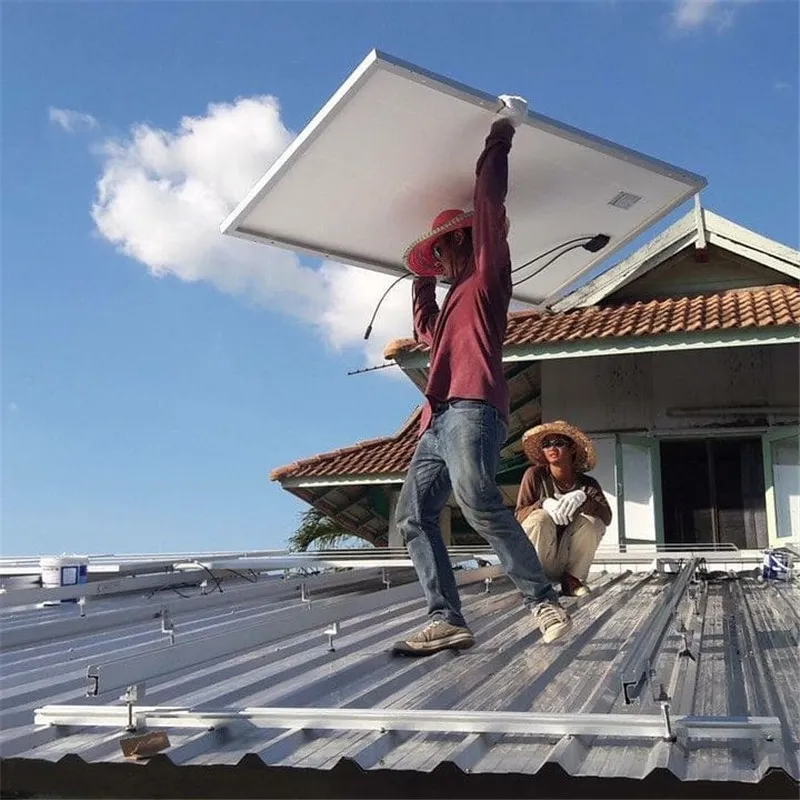
EPDM Washers and Roof Penetration Details
Penetrating roof attachments require a project-appropriate weather-sealing detail. Hanger-bolt and roof-screw assemblies may include EPDM washers, sealing washers, flange nuts, gaskets or flashing components according to the selected system.
Sealing parts must match the roof profile, fastener, hole position and installation method. The roof condition and local construction requirements should be reviewed by the responsible installer or project designer before installation.
- EPDM or project-specific sealing washers according to assembly design
- Flange nuts, washers and compression position matched to the fastener
- Roof penetration located at an approved fixing point
- Pre-drilling and installation procedure according to the supporting material
- Final inspection of sealing contact and hardware alignment
Connecting Solar Mounting L Feet to Aluminum Rails
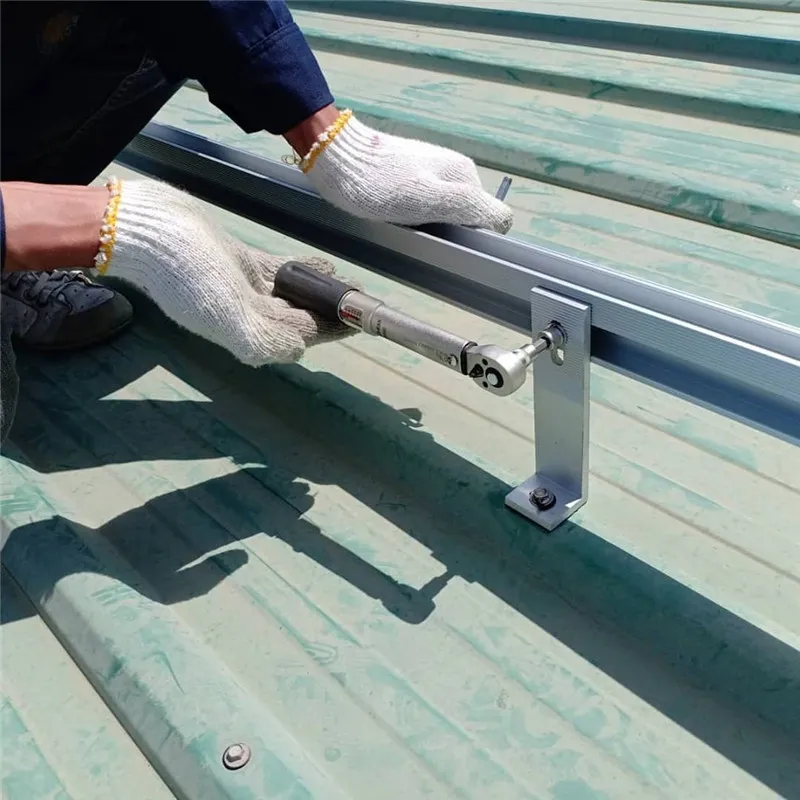
The upper slot or hole of the L foot connects to a compatible solar mounting rail with a bolt, T-bolt, channel nut or other approved rail hardware. The connection must match the rail slot, bracket thickness, bolt size and required adjustment range.
Long rails, short rails and different profile channels may require different L-foot geometry or connection hardware. Provide the rail cross-section and L-foot drawing for accurate matching.
- Rail slot and channel-nut compatibility
- Bolt diameter, thread, length and washer selection
- Vertical slot for rail height adjustment where specified
- L-foot width and bearing surface matched to the rail interface
- Project-specific torque and installation procedure confirmation
Thread, Length and Supporting Structure Selection
A hanger bolt assembly must be selected according to the supporting material below the roof, required embedment, roof build-up, clearance above the roof and adapter or L-foot connection.
Thread diameter and total length alone are not enough to confirm compatibility. The lower thread, upper machine thread, unthreaded section, washer position, roof profile and supporting member must be reviewed together.
- Lower thread selected for the approved supporting material
- Upper machine thread matched to nuts, adapter plate or L foot
- Total length planned around roof build-up and required clearance
- Washers and sealing components positioned according to the assembly
- Supporting member and fixing location confirmed before installation
Components Used with Solar Mounting L Feet
L feet and hanger bolts should be selected together with rails, fasteners, flashing or sealing parts and the complete metal roof mounting system.
Solar Mounting Rails
Aluminum rail profiles matched to L-foot slots, bolts and channel hardware.
View Mounting Rails →Bolts & Fasteners
Roof screws, hanger bolts, rail bolts, nuts, washers and compatible connection hardware.
View Bolts & Fasteners →Flashing & Sealing Parts
Roof-interface components for selected penetrating attachment and weather-sealing details.
View Flashing Plates →Solar Panel Clamps
Mid and end clamps securing framed modules to the rail supported by the L feet.
View Solar Panel Clamps →Mounting Brackets
Additional bracket and adapter options for selected roof, rail and structural interfaces.
View Mounting Brackets →Grounding Parts
Grounding and bonding components selected for the module, rail and mounting system.
View Grounding Parts →How to Select Solar Mounting L Feet and Hanger Bolts
Confirm the roof, supporting member, rail and sealing details together before choosing the attachment set and project quantity.
Identify the Roof Profile
Provide corrugated, trapezoidal or other roof profile drawings, dimensions and material details.
Confirm the Substructure
Identify the supporting member, fixing position, material and available embedment conditions.
Match the Rail Interface
Provide rail cross-section, slot dimensions, bolt type and required height adjustment.
Prepare the Project Set
Confirm L feet, bolts, nuts, washers, seals, quantity, packaging and delivery requirements.
Custom Solar Mounting L Foot and Hanger Bolt Kits
Easy Solar supports standard metal roof attachment sets and drawing-based hardware projects for distributors, EPC contractors, installers and OEM buyers.
Custom work can include L-foot dimensions, slot length, hole position, plate thickness, bolt diameter, thread combination, total length, adapter plate, sealing components, surface treatment, assembly and project packaging. Final details depend on the drawing, material and order quantity.
- Custom L-foot height, width, thickness, slots and holes
- Custom hanger-bolt diameter, thread and total length
- Adapter plates, nuts, washers, EPDM parts and rail hardware
- Anodized, stainless steel, galvanized or project-specific finish
- Pre-assembled kits, OEM labels and project-set packaging
Solar Mounting L Foot and Hanger Bolt Supplier
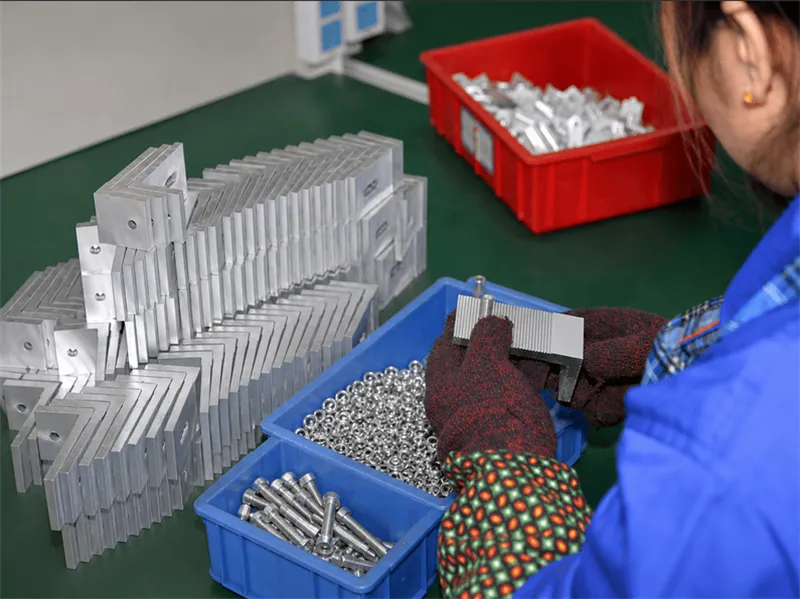
Easy Solar supports professional buyers with aluminum bracket processing, stainless steel hardware matching, assembly, inspection and export-ready project supply.
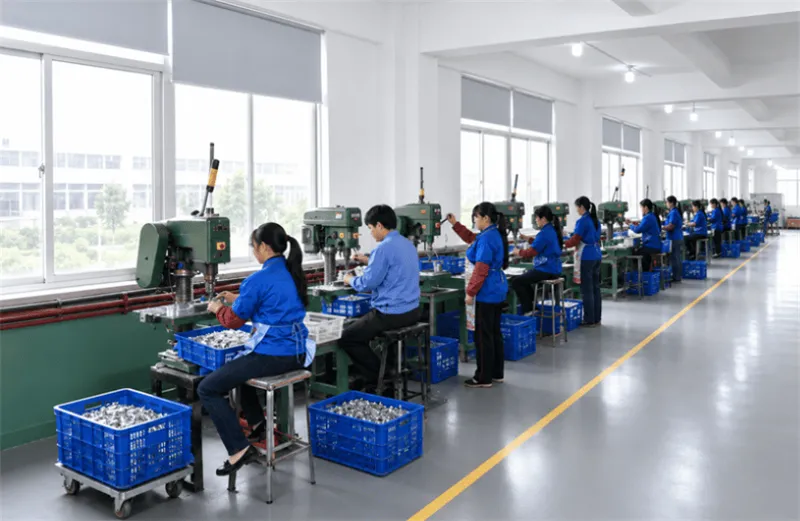
L Foot Processing
Aluminum L feet can be produced with confirmed dimensions, holes, slots, thickness and surface treatment according to the product drawing.
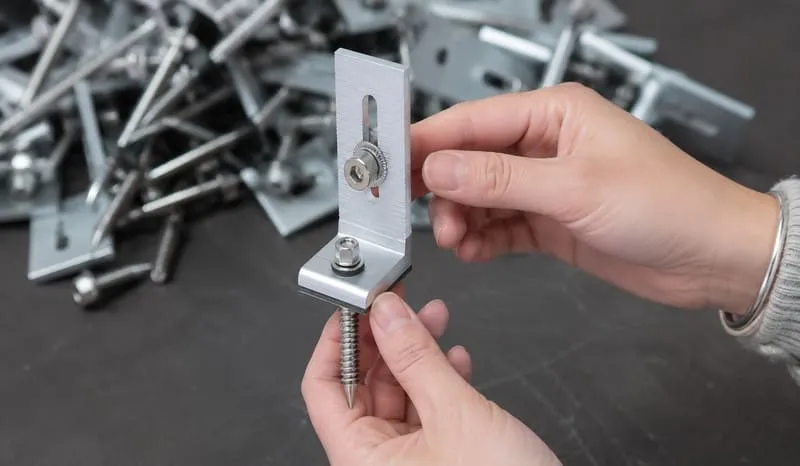
Hardware Matching & Assembly
Hanger bolts, nuts, washers, seals, adapter plates and rail hardware can be matched as loose parts or assembled project kits.
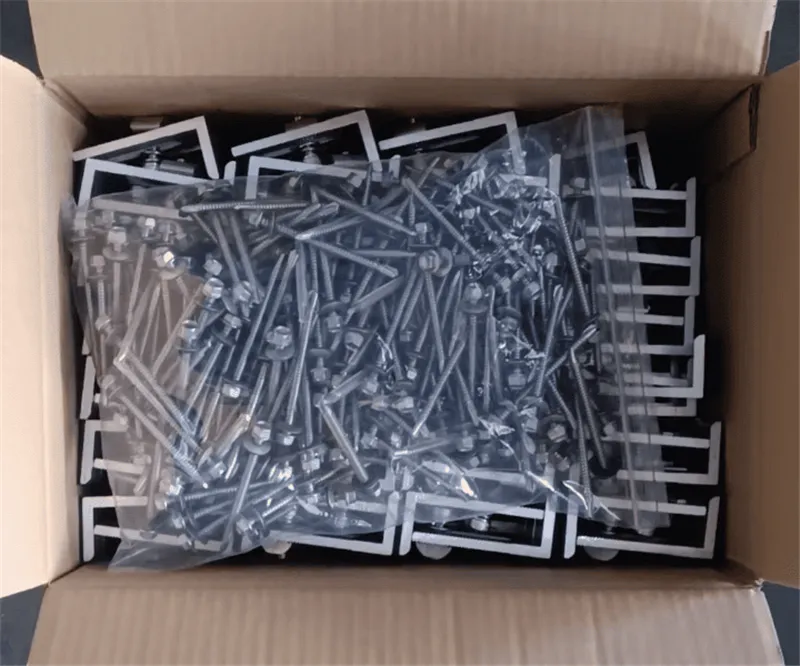
Bulk & Project Packaging
Metal roof attachment hardware can be packed by model, installation area, project set, carton quantity or OEM label requirement.
Solar Mounting L Feet and Hanger Bolts Specifications
Final specifications depend on roof profile, supporting member, rail interface, sealing detail, material and project installation requirements.
| Product Name | Solar Mounting L Feet / Aluminum L Foot for Roof Solar Mount / Solar Hanger Bolt Kits |
|---|---|
| Product Options | Standard L feet, adjustable L feet, L feet with roof screws, L feet with hanger bolts, adapter plates and custom hardware kits |
| Roof Applications | Corrugated, trapezoidal and selected pitched metal roof PV mounting systems, subject to project confirmation |
| L Foot Material | Aluminum alloy or project-specific material according to bracket design and buyer specification |
| Hanger Bolt Material | Stainless steel or project-specific material according to assembly and installation requirements |
| Sealing Components | EPDM washers, sealing washers, flange nuts, gaskets or project-specific roof-interface parts |
| Rail Compatibility | Matched according to rail profile, slot dimensions, T-bolt or channel-nut interface and L-foot geometry |
| Adjustment | Defined height or position adjustment according to elongated slots, threaded hardware and adapter design |
| Customization | L-foot dimensions, slots, holes, thickness, bolt diameter, thread, length, adapter plates, seals, finish and packaging available upon discussion |
| Buyer Type | EPC contractors, solar installers, distributors, wholesalers, OEM customers and PV project developers |
Request an L Foot and Hanger Bolt Quote
Send Easy Solar the roof profile, supporting member, rail drawing, L-foot or hanger-bolt dimensions, sealing requirements and project quantity. Our team will help review the attachment set and prepare a factory-direct quotation.
- Roof profile drawing and material
- Supporting member and fixing position
- Rail cross-section and connection hardware
- L-foot dimensions, holes and slots
- Hanger-bolt diameter, thread and length
- EPDM, washer and sealing requirements
- Quantity, packaging and delivery plan
Solar Mounting L Feet and Hanger Bolts FAQ
Common questions from solar installers, EPC contractors, distributors and metal roof mounting buyers.
What is a solar mounting L foot?
A solar mounting L foot is an L-shaped bracket that connects a compatible solar mounting rail to a roof attachment, screw, hanger bolt, base or other approved supporting interface.
What is a solar hanger bolt used for?
A hanger bolt can create a threaded fixing between a suitable supporting member below the roof and an L foot or adapter plate above the roof, subject to the roof and structural design.
Can L feet and hanger bolts be used together?
Yes. A hanger bolt may connect to an L foot or adapter plate, which then supports the solar mounting rail. The exact assembly depends on the roof profile and rail system.
Which roof types can use solar mounting L feet?
L feet are commonly used in selected corrugated, trapezoidal and pitched metal roof systems. Compatibility must be confirmed from the roof profile, supporting member and attachment method.
Do hanger bolt kits include EPDM washers?
EPDM washers or other sealing parts can be included according to the selected kit and project specification. The final weather-sealing detail should be confirmed for the roof system.
How do I choose the correct hanger bolt length?
Length selection depends on the roof build-up, supporting member, required embedment, clearance above the roof, nut position and L-foot or adapter connection.
Are L feet compatible with different solar mounting rails?
Compatibility depends on the rail slot, T-bolt or channel nut, L-foot slot, bracket thickness and required height adjustment. Please provide the rail cross-section for matching.
Can the L-foot height and slot be customized?
Yes. L-foot height, width, thickness, round holes, elongated slots and surface treatment can be discussed according to drawings and order quantity.
Can you supply complete L foot and hanger bolt kits?
Yes. Kits can include L feet or adapter plates, hanger bolts, nuts, washers, EPDM parts and compatible rail connection hardware according to the confirmed bill of materials.
What information is needed for a quotation?
Please provide the roof profile, supporting member, rail drawing, L-foot dimensions, hanger-bolt diameter and length, sealing requirements, quantity, packaging and project location.