
Tile Roof Solar Mounting System
Select the roof attachment from the actual tile profile, roof build-up, structural fixing position and required tile clearance. Then match the hook or roof attachment to the rail, module layout and project design loads.
- Clay & Concrete Tile
- Flat / Plain Tile
- Curved / Pan Tile
- Structural Roof Hooks
- Flashing by Attachment

Identify the Tile Family and Roof Build-Up First
Different tile shapes can require different hook arms, base geometry, adjustment range or replacement-tile details.
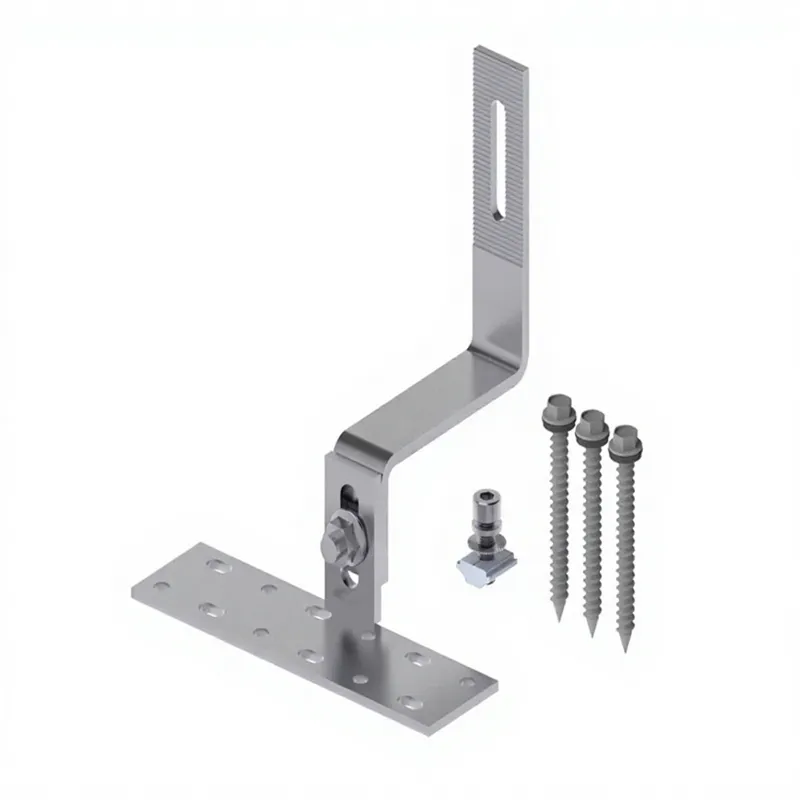
Pan / Interlocking / Curved Tile
Check the valley, overlap, batten height and available space for the hook arm without point-loading or lifting the tile.

Flat / Plain Tile
Low-clearance coverings can require a dedicated flat-tile hook, slim attachment or replacement-tile system rather than a standard curved-tile arm.

Large-Overlap / High-Profile Tile
Longer or higher-clearance hook geometry may be needed where tile overlap, profile height or structural conditions exceed a standard hook range.
The Tile Is a Roof Covering, Not the Primary Structural Fixing
The PV attachment should transfer loads through the selected hook, base or anchor into an approved rafter, truss, deck or other structural substrate. Hook geometry must preserve the tile's weather-shedding function.
- Locate the approved structural fixing point before choosing the hook or base.
- Match structural fastener type, embedment and edge distances to the substrate.
- Use only the documented vertical/lateral adjustment range of the selected attachment.
- Set attachment spacing from the structural calculation rather than a generic hooks-per-module rule.
- Use a higher-capacity or alternative attachment where the project loads require it.
Choose the Hook Geometry Around the Tile—Not Through the Tile Load Path
A well-matched attachment clears the covering while keeping structural force out of the tile itself.
Tile Profile
Shape, thickness, overlap/headlap and fragile zones around the planned attachment.
Batten & Rafter Position
Batten height and the horizontal/vertical offset between the tile valley and structural fixing point.
Hook Adjustment
Only use the model's documented height or lateral adjustment to achieve the required clearance.
Rail Interface
Confirm rail connection, rail height, module clamp zones and any required adapter hardware.

Flashing Is a Roof-Interface Detail, Not a Separate Structural Mount Type
Some tile-roof attachments use deck flashing, sub-flashing, tile replacement flashing or another product-specific weathering detail. The required method depends on the attachment and roof construction.
- Use the flashing or sealing detail documented for the selected attachment.
- Preserve the tile overlap and normal roof drainage path.
- Replace cracked or damaged tiles rather than relying on sealant to compensate.
- Check roof-manufacturer, code and local roofing requirements before final installation.
- Do not describe all tile-roof attachments as universally “waterproof.”
Information Needed Before Hook Spacing and the BOM Are Finalized
Tile profile & dimensions
Roof/tile photos, profile name if known, tile depth, overlap and any fragile or replaced areas.
Rafter / truss / deck
Structural substrate, framing spacing, batten height and the intended attachment location.
Module & rail data
Module dimensions, frame/clamp zones, orientation, rail direction and preliminary array layout.
Project loads
Project location, roof pitch and applicable wind, snow and other structural design criteria.
Use Product-Level Data for the Final Tile Roof System
Final dimensions, materials and capacities should come from the selected roof hook, flashing, rail and fastener documentation.
| Tile compatibility | Documented tile family, profile geometry, thickness/overlap and required clearance. |
|---|---|
| Structural fixing | Approved rafter, truss, deck or other structural substrate with specified fastener and embedment. |
| Hook / attachment geometry | Base, arm and documented height/lateral adjustment range for the selected product. |
| Rail / module interface | Compatible rail/adapter, module clamp and approved module-frame clamp zones. |
| Weathering | Attachment-specific deck flashing, sub-flashing, tile replacement or other documented sealing detail. |
| Materials | Actual aluminum, stainless steel, coated steel and fastener materials/coatings for the selected components and exposure conditions. |
| Structural capacity | Verified component loads and attachment spacing based on the project roof geometry and structural design. |
Send the Tile and Roof-Structure Details
Provide roof/tile photos, the structural fixing information, module data and project design inputs so the attachment and rail system can be matched to the actual roof.
- Tile profile + clear roof photos
- Rafter / truss / deck information
- Batten height + roof pitch
- PV module datasheet + preliminary layout
- Project location + structural design criteria
Tile Roof Mounting Questions
Can one roof hook fit every clay and concrete tile?
No. Some hook families cover a broad range, but compatibility still depends on tile geometry, batten/rafter position, required clearance, structural loads and the documented adjustment range.
Does every tile-roof attachment require the same flashing?
No. Deck flashing, sub-flashing, tile replacement flashing and other weathering details are attachment- and roof-specific.
Should the tile carry the PV mounting load?
No. The tile is part of the roof covering. The mounting attachment should transfer load into an approved structural substrate while maintaining the required tile clearance.
What information is needed for a quotation?
Send tile/roof photos, roof structure and batten information, module data/layout, roof pitch, project location and structural design criteria.