
Types of Solar Mounting Systems: A Practical Selection Guide
Choosing a solar mounting system is not simply a matter of deciding whether the panels will be installed on a roof or on the ground.
The installation surface is only the first decision. Module dimensions, roof structure, soil conditions, wind and snow requirements, tilt angle, available space, foundation method, access for construction equipment, and long-term maintenance can all change the final mounting configuration.
This guide explains the main types of solar mounting systems, how they are classified, and which engineering inputs should be reviewed before selecting a system.
Quick Answer: What Are the Main Types of Solar Mounting Systems?
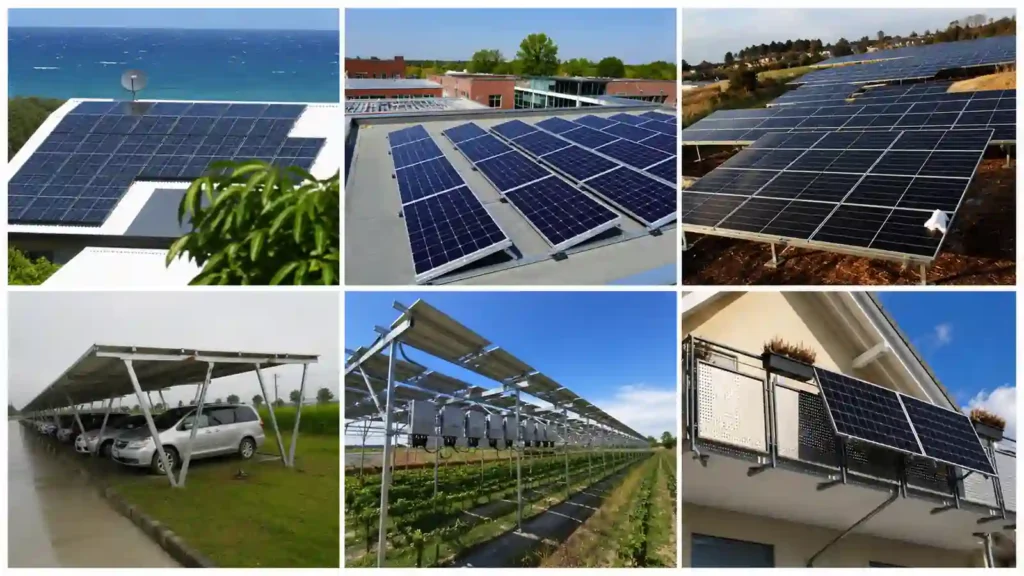
Solar mounting systems are most commonly grouped by where the PV array is installed:
- Roof mounting systems for pitched and flat roofs
- Ground mounting systems using fixed-tilt or tracking structures
- Solar carports installed above parking areas
- Agrivoltaic mounting systems designed to share land with agriculture
- Balcony mounting systems for small distributed PV applications
Other specialized systems include pole mounts, façade or building-integrated PV, in-roof systems, and floating solar.
However, installation location is only one way to classify solar mounting. The same project can also be classified by structural behavior, attachment method, or foundation type.
The U.S. Department of Energy similarly treats rooftop PV, ground-mounted PV, and carport PV as project types with different structural and site considerations.
Solar Mounting System Types at a Glance
| Mounting Type | Typical Installation | Main Structural Interface | Key Engineering Question |
|---|---|---|---|
| Pitched Roof | Metal, tile, shingle roofs | Roof attachment + rail/direct support | How will loads transfer into the roof structure? |
| Flat Roof | Commercial and industrial roofs | Ballast and/or mechanical attachment, concrete foundation | Can the roof support the system and resist wind uplift? |
| Fixed-Tilt Ground Mount | Open land | Piles, ground screws , concrete or ballast | Which foundation suits the soil and structural reactions? |
| Tracking Ground Mount | Large ground projects | Foundation + moving tracker structure | Does the energy benefit justify mechanical and O&M complexity? |
| Solar Carport | Parking areas | Foundations + columns + canopy | How will PV geometry coordinate with vehicles and drainage? |
| Agrivoltaic | Agricultural land | Foundations + elevated structure | What clearance and spacing(GL) are required for continued agricultural use? |
| Balcony Mount | Balcony, railing or wall | Compact structural attachment | Can the railing or supporting structure safely carry the system loads? |
There is no single mounting type that is automatically best.
The suitable system is the one that matches the site, supporting structure, module layout, environmental loads installation conditions and cost budget.
How Are Solar Mounting Systems Classified?
A useful solar mounting classification should distinguish between three different questions.
1. By Installation Location
The first question is where the PV array will be installed:
- Building roof
- Open ground
- Parking area
- Agricultural land
- Balcony or façade
- Water surface
- Other specialized structures
This normally determines the basic mounting family.
2. By Structural Behavior
The second question is how the modules are positioned during operation.
Fixed Mounting
The modules remain at a predetermined tilt and orientation.
Most rooftop systems, carports, agrivoltaic structures and many ground-mounted systems use fixed structures.
Adjustable Mounting
The adjustable solar mounting systems allow for manual tilt angle adjustment within a specified range.
Tracking Mounting
The tracking structures automatically move the PV modules throughout the day to follow the sun.
Single-axis trackers are widely used in utility-scale PV where the site, economics and operating strategy support the additional mechanical equipment.
DOE notes that ground-mounted arrays may use tracking mechanisms to follow the sun and increase energy capture, while NREL data also shows the importance of single-axis tracking in utility-scale PV deployment.
3. By Attachment or Foundation Method
A third classification describes how structural loads are transferred.
Examples include:
- Mechanical roof attachments
- Ballasted roof mounting
- Driven piles
- Ground screws
- Concrete foundations
- Direct structural connections
- Hybrid ballast and mechanical attachment
This distinction is important because mounting type and foundation type are not the same decision.
For example, two fixed-tilt ground systems may use completely different foundations because of different soil conditions.
What Actually Determines the Mounting System?
Before looking at individual product types, it is more useful to understand the engineering inputs that change the mounting configuration.
Solar Mounting Selection Matrix
| Project Input | What It Can Affect |
|---|---|
| Installation environment | Basic mounting family |
| Roof profile | Roof attachment method |
| Roof structural member | Attachment position and load transfer |
| Module dimensions | Rail length, clamp position and table geometry |
| Module orientation | Structural layout and component quantities |
| Wind design input | Member sizing, spacing, attachments and foundations |
| Snow requirement | Structural members, spacing and tilt considerations |
| Soil condition | Ground foundation concept |
| Tilt angle | Structural geometry and support height |
| Terrain | Foundation installation and table arrangement |
| Parking layout | Carport column locations and spans |
| Agricultural machinery | Agrivoltaic clearance and row spacing |
| Corrosion environment | Material and surface-treatment requirements |
| Installation access | Rail lengths, equipment requirements and assembly strategy |
| Maintenance access | Row spacing and service clearances |
This is why selecting a mounting system from a product photograph alone is rarely enough for an engineering project.
1. Roof Solar Mounting Systems
Roof solar mounting systems use an existing building as the primary supporting structure.
The first question should therefore not be:
Which solar bracket should I use?
It should be:
What roof and structural interface are we attaching to?
DOE recommends evaluating rooftop PV based on roof compatibility, structural strength, roof condition and wind exposure.
Pitched Roof Mounting
Pitched-roof PV generally follows or remains close to the existing roof slope.
A typical system may include:
- Roof attachments
- Aluminum rails or short mounting profiles
- Mid clamps
- End clamps
- Rail clamps
- Rail connectors
- Fasteners
- Grounding components
The exact attachment depends on both the roof covering and the structural member below it.
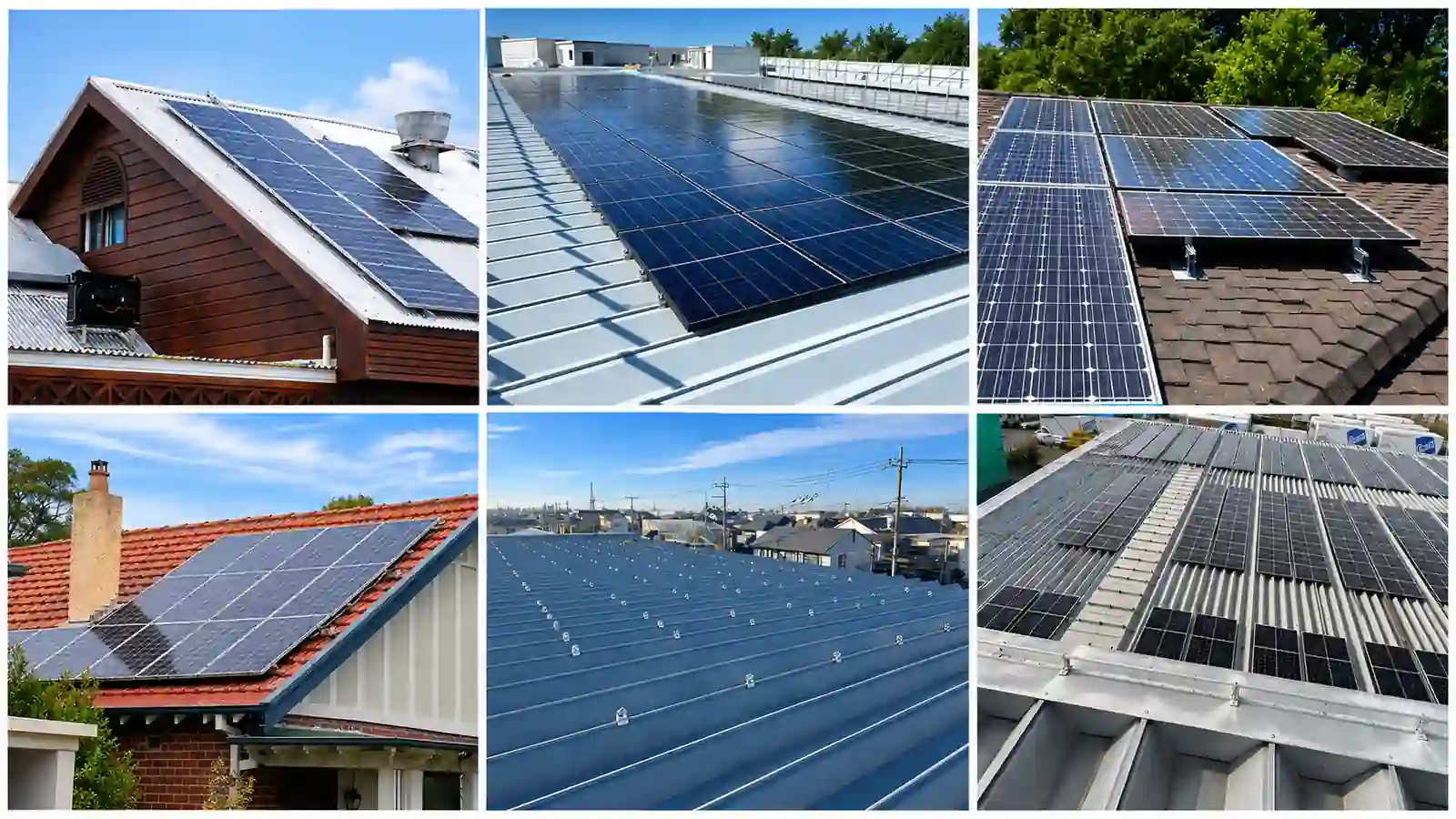
Metal Roof Mounting
“Metal roof” is not one mounting condition.
Different profiles may require different interfaces.
Trapezoidal or Corrugated Metal Roof
Depending on the roof profile and structural arrangement, possible mounting interfaces may include:
- L feet
- Hanger bolts
- Short or mini rails
- Profile-specific brackets
- Adjustable or elevated support structures where required
The mounting method should be selected from the actual roof cross-section and structural support, not simply from the description “metal roof.”
Standing-Seam Roof
Compatible standing-seam roofs can use seam clamps that grip the seam without penetrating it.
The clamp geometry must match the actual seam profile.
Additional rail or support structures can then be connected above the seam clamp according to the required module configuration.
The standing-seam roofs can also utilize the standing seam clamp and L feet mounting solution.
Tile Roof Mounting
Tile-roof systems commonly use roof hooks or structural attachments connected to the load-bearing structure below the roof covering.
The design needs to coordinate:
- Hook position
- Structural connection
- Tile clearance
- Rail direction
- Waterproofing details
- Module layout
The roof covering itself should not be treated as the primary structural attachment.
Shingle Roof Mounting
Shingle-roof systems normally transfer loads to rafters or another suitable structural element.
Flashing and waterproofing details are particularly important where the mounting system penetrates the roof envelope.
Flat Roof Solar Mounting Systems
Flat and low-slope roofs usually require the mounting structure itself to create the module tilt.
Two broad approaches are commonly used.
Ballasted Mounting
Ballasted systems use added weight as part of the resistance against movement and wind uplift.
Their main advantage is that roof penetrations can sometimes be reduced.
However, ballast adds dead load to the building, so roof structural capacity must be reviewed.
The U.S. Department of Energy describes ballasted racking as a common commercial flat-roof approach and notes that the amount of ballast and mechanical attachment depends on roof capacity and wind-load requirements.
Mechanically Attached Mounting
Mechanically attached systems transfer loads into the roof or building structure through structural attachment points.
This may reduce ballast requirements but introduces roof penetrations that must be properly detailed and sealed.
Hybrid Systems
Some flat-roof projects combine ballast with selected mechanical attachments.
This is why the practical decision is not simply:
Ballasted or attached?
The engineer needs to consider:
- Roof structural capacity
- Wind exposure
- Waterproofing
- Attachment restrictions
- Roof membrane
- Module layout
- Available ballast
- Local design requirements
DOE severe-weather guidance specifically warns against treating full ballast as universally appropriate in higher wind conditions.
2. Ground Solar Mounting Systems
Ground-mounted PV creates its own supporting structure instead of relying on an existing building.
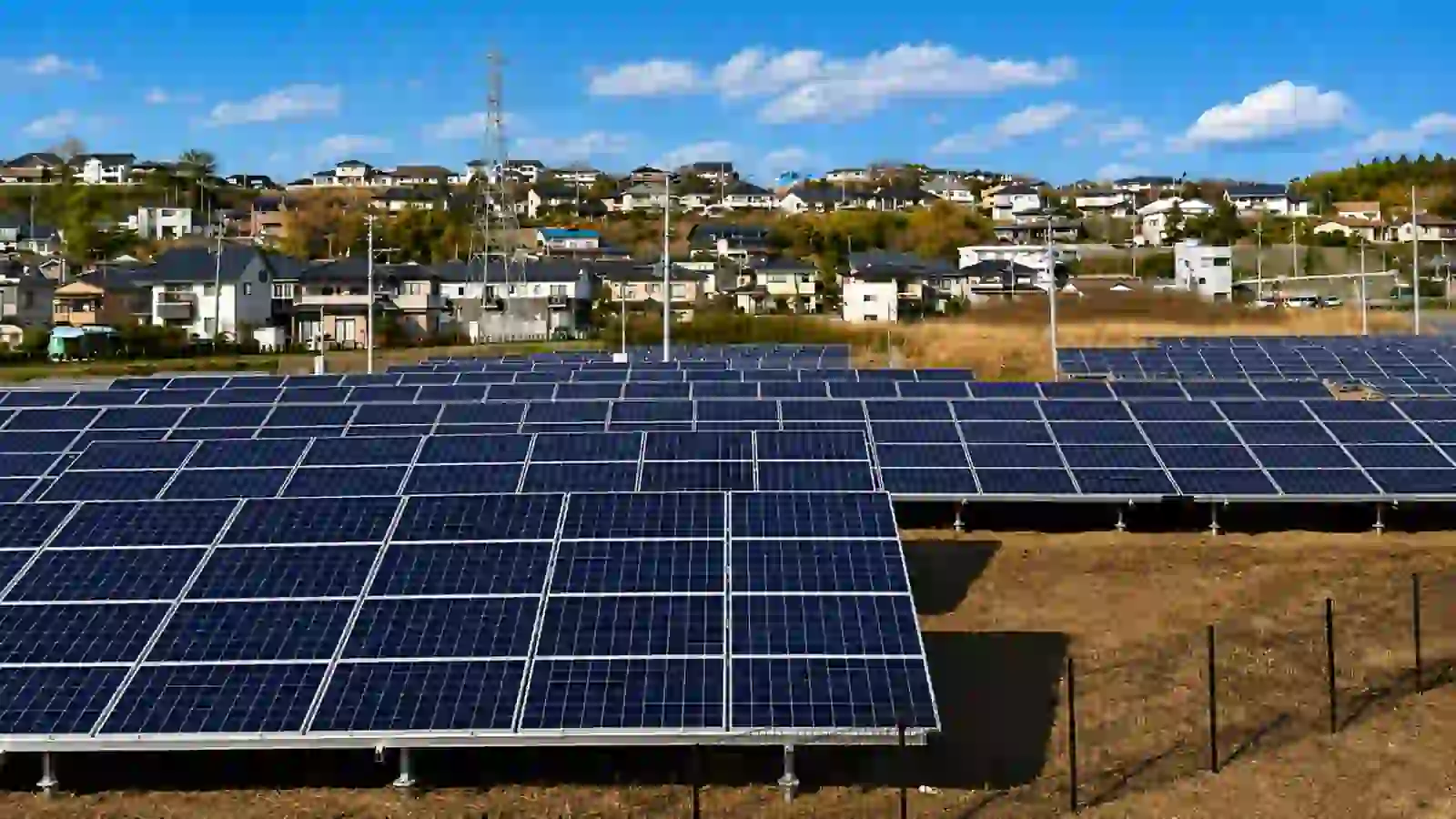
This provides greater flexibility in:
- Module orientation
- Tilt
- Row spacing
- Ground clearance
- Maintenance access
But it also introduces another major engineering question:
How will the structure connect to the ground?
Fixed-Tilt Ground Mount
A fixed-tilt structure holds modules at a predetermined angle.
Typical components can include:
- Foundations
- Base
- Posts
- Main beams
- Bracing
- Rails or purlins
- Module clamps
- Structural fasteners
Because there is no daily tracking movement, fixed-tilt systems are mechanically simpler than trackers.
They can be used across commercial, industrial and utility-scale projects.
Single-Axis Tracking
A single-axis tracker rotates module rows during the day.
Additional components may include:
- Torque tubes
- Bearings
- Drive units
- Motors or actuators
- Controllers
- Moving module supports
Tracking can improve energy capture in suitable projects, but the decision also needs to consider:
- Terrain
- Project scale
- Foundation requirements
- Mechanical complexity
- Capital cost
- Operations and maintenance
- Site layout
The question is therefore not simply whether tracking produces more energy.
The relevant question is whether the complete project benefits from the additional mechanical system.
Ground Foundations: Ground Screw, Driven Pile or Concrete?
The foundation should not be selected independently of the site.
Ground Screws
Ground screws use the hot-dip galvanizing steel screw-type foundations installed into suitable soil.
Potential project advantages can include:
- Reduced concrete work
- Fast structural connection after installation
- Potential removability
- Suitability for selected irregular or sloping sites
Actual suitability depends on ground conditions, engineering verification, solar panel array, GL snow load and wind speed.
Driven Piles
Driven piles are commonly used where repetitive pile installation is practical in large-scale photovoltaic panel installation site.
Foundation design still depends on:
- Soil conditions
- Pile section
- Embedment depth
- Pull-out resistance
- Lateral resistance
- Corrosion conditions
- Installation equipment
Concrete Foundations
Concrete foundations may be considered where driven piles or ground screws are unsuitable or where the structural concept requires a different foundation interface or the PV installation site already with an existing concrete surface.
They normally involve additional:
- Excavation
- Formwork or precast preparation
- Concrete work
- Curing
- Civil construction
There is therefore no universal “best” foundation for ground-mounted solar.
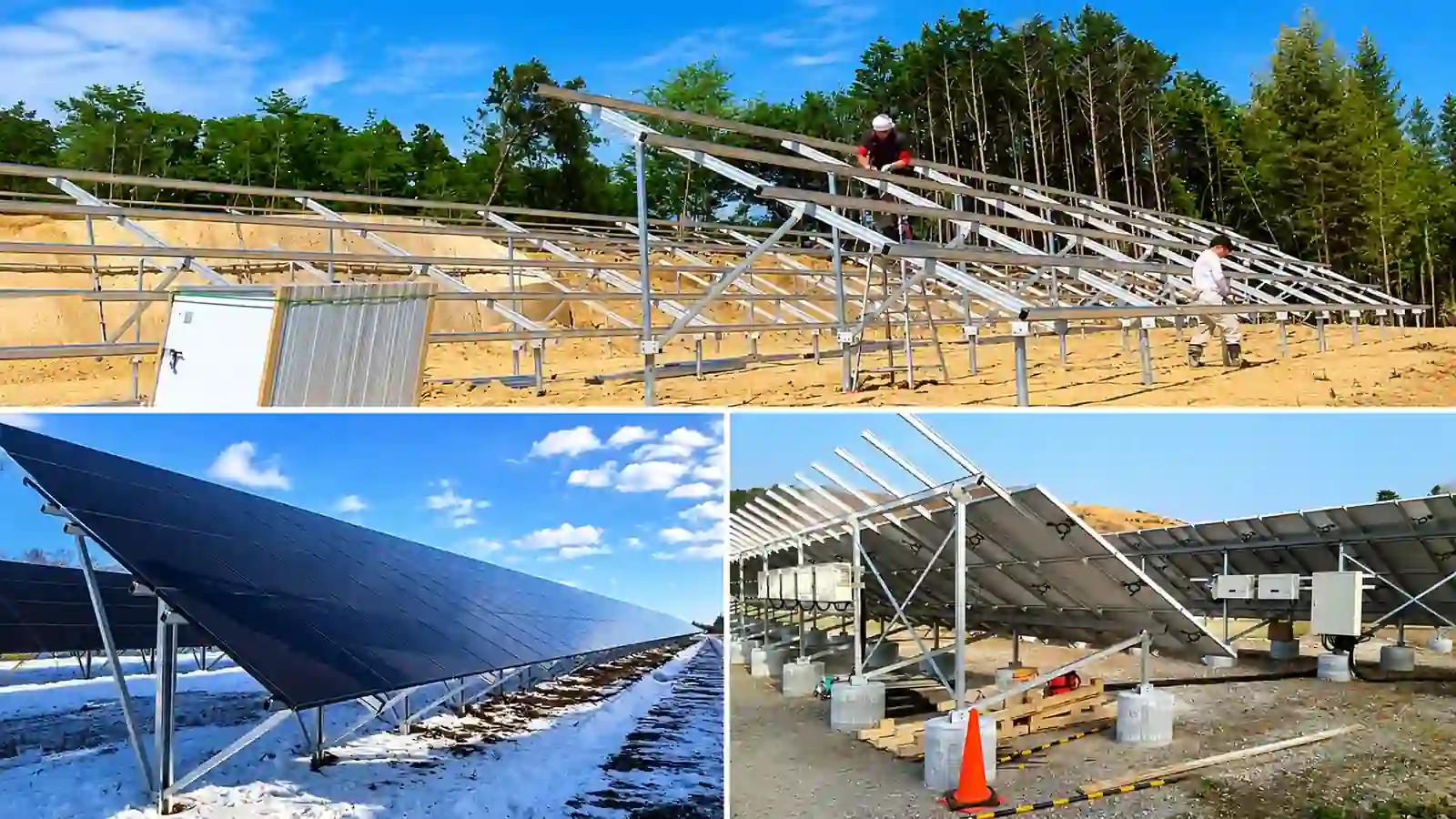
Real Engineering Example: One Ground Project, Multiple Mounting Configurations
A historical Easy Solar engineering project in Japan illustrates why choosing “ground mount” is only the first structural decision.
The project was approximately 316 kW and used a ground-screw foundation concept.
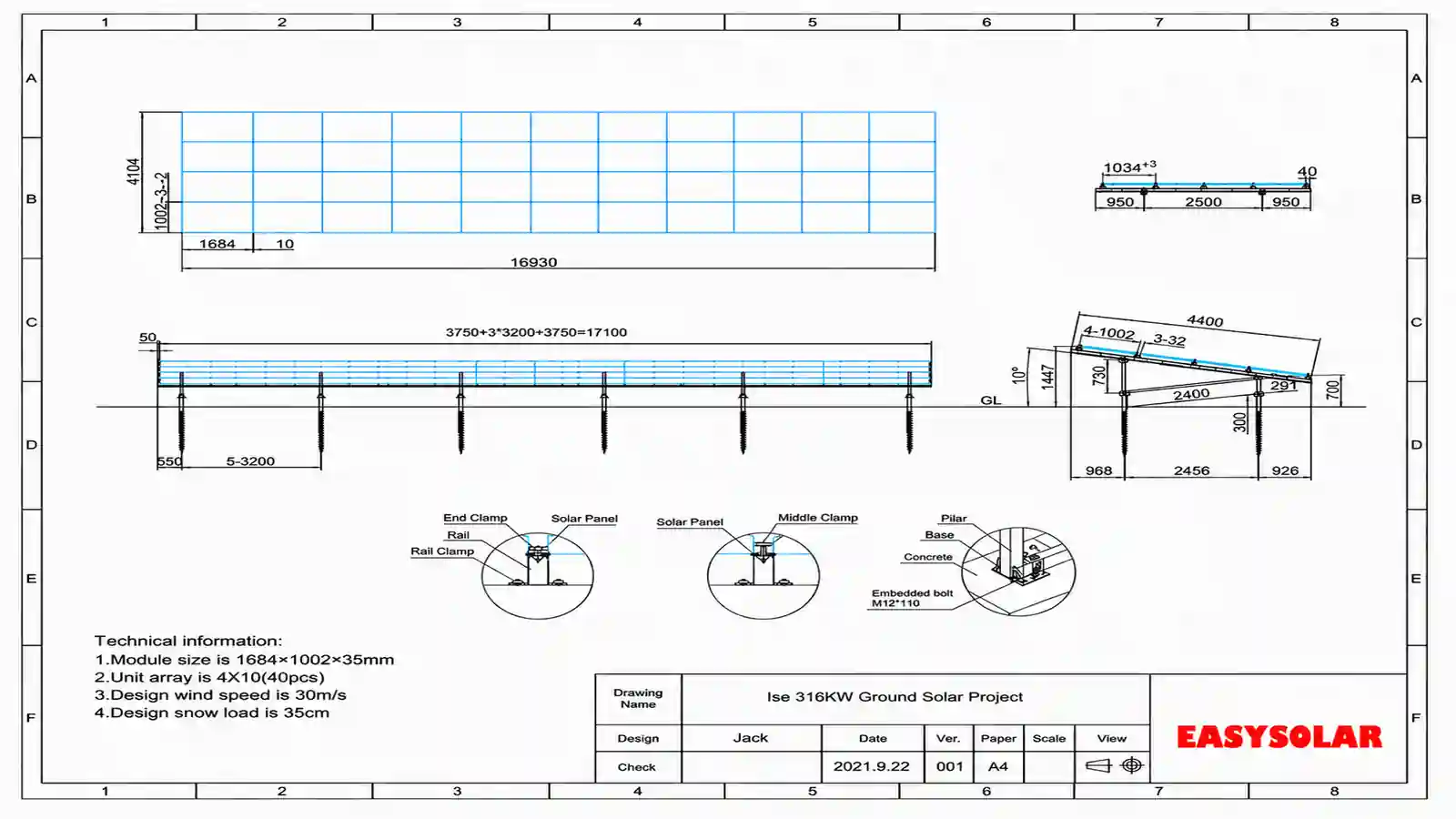
Project drawings listed:
- PV module size: 1684 × 1002 × 35 mm
- Wind design input: 30 m/s
- Snow condition: 35 cm
- Reference standard: JIS C 8955:2017
- Multiple array/table configurations
- Tilt configurations of 10°, 20° and 30°
The project did not use one identical mounting table across the entire site. Different array sizes and tilt configurations were used within the same project.
More importantly, the structural drawings stated that the final foundation specification should be determined according to geotechnical investigation or on-site testing.
Engineering Takeaway
“Ground-mounted” describes the project family, not the final structure.
Even within one site, module arrangement, tilt, table size, structural span and foundation layout can change according to the site and engineering inputs.
JIS C 8955:2017 is a Japanese standard covering load design for structures supporting photovoltaic arrays installed on the ground or on buildings.
3. Solar Carport Mounting Systems
A solar carport combines PV generation with an occupied parking canopy.
Unlike a conventional ground-mounted array, the space beneath the modules must remain usable.
Typical structural elements include:
- Foundations
- Base
- Columns
- Main beams
- Bracing
- Module rails or purlins
- Module clamps
- Drainage components where applicable
The design therefore needs to coordinate PV requirements with the parking environment.
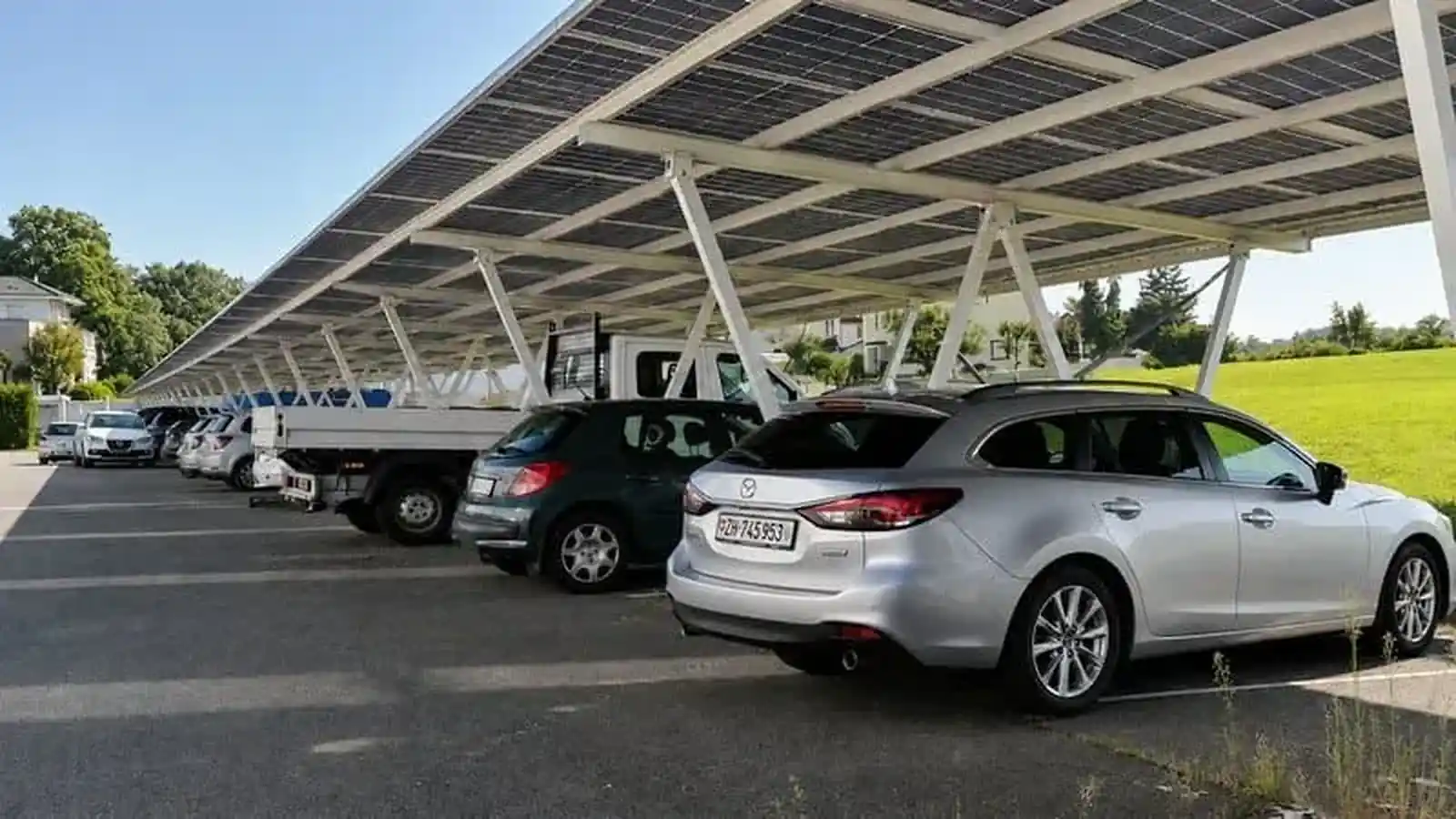
Important inputs include:
- Parking-bay dimensions
- Vehicle clearance
- Drive lanes
- Column locations
- Canopy span
- Pedestrian routes
- Rainwater drainage
- Lighting
- EV charging equipment
- Service access
- Wind and snow requirements
DOE treats carports separately from standard rooftop and ground-mounted PV because the occupied space below the structure introduces additional planning requirements. Its guidance specifically highlights drainage, vehicle clearance, column protection and service access.
Foundation selection should still be based on structural reactions, geotechnical conditions, existing pavement and construction requirements rather than assuming one foundation type is universally superior.
4. Agrivoltaic Mounting Systems
Agrivoltaics allows photovoltaic generation and agricultural production to share the same land.
DOE defines agrivoltaics as agricultural activity—including crops, livestock or pollinator habitat—located underneath or between rows of solar panels.
This changes the mounting structure considerably.
A conventional ground-mounted array may only require clearance for installation, vegetation management and maintenance.
Agrivoltaic structures may also need to accommodate:
- Tractors
- Agricultural machinery
- Workers
- Crops
- Livestock
- Irrigation equipment
- Farm-access routes
As a result, the design may require:
- Increased ground clearance
- Different column heights
- Longer structural spans
- Additional bracing
- Wider row spacing
- Different foundation reactions
Module height, density and row spacing also affect how much light reaches the agricultural area.
DOE agrivoltaic research specifically identifies solar configuration, site layout and the ability of farm equipment such as tractors to operate around or beneath the system as important project considerations.
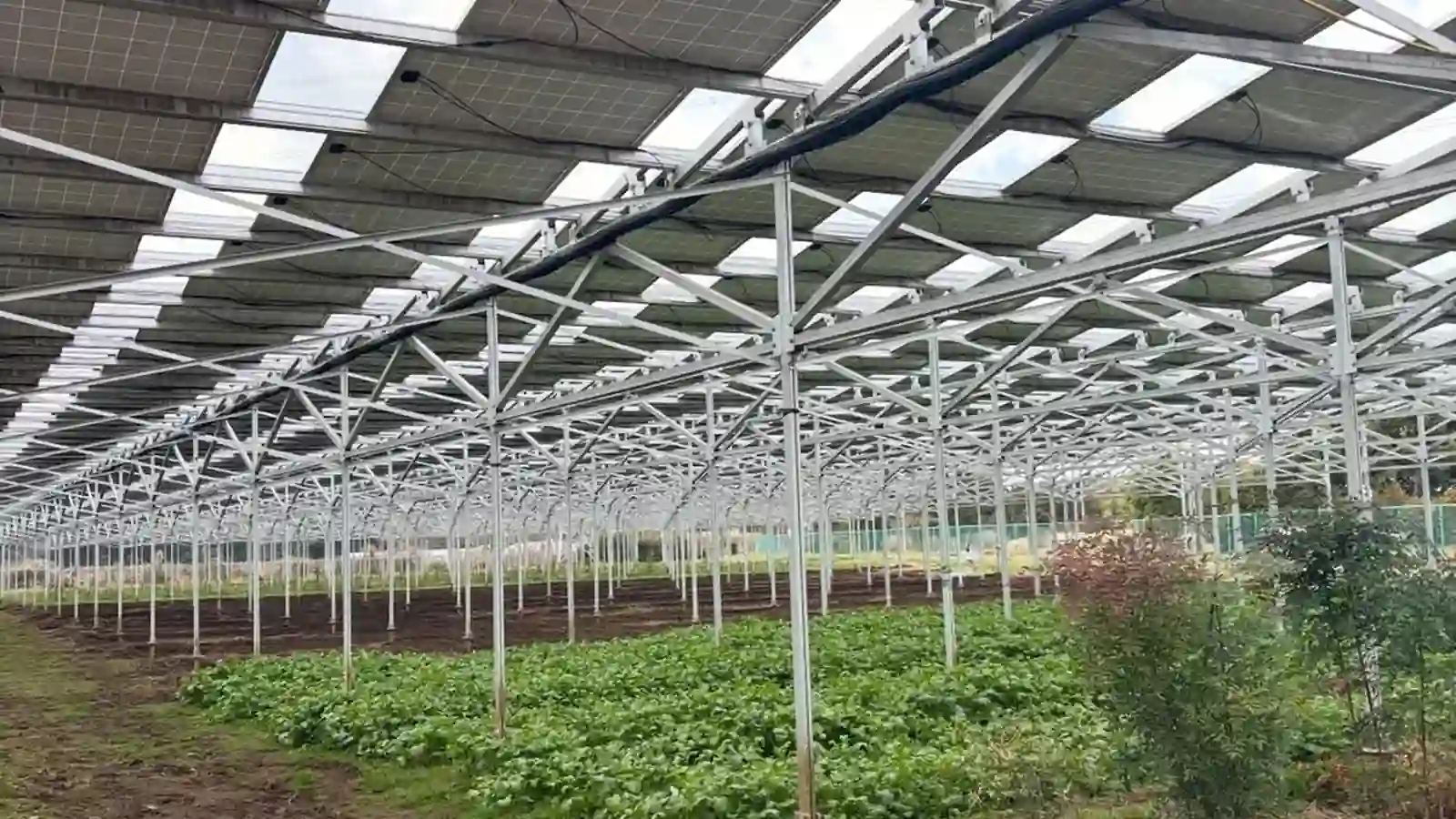
Agrivoltaic mounting should therefore be designed around both the PV system and the continuing agricultural activity.
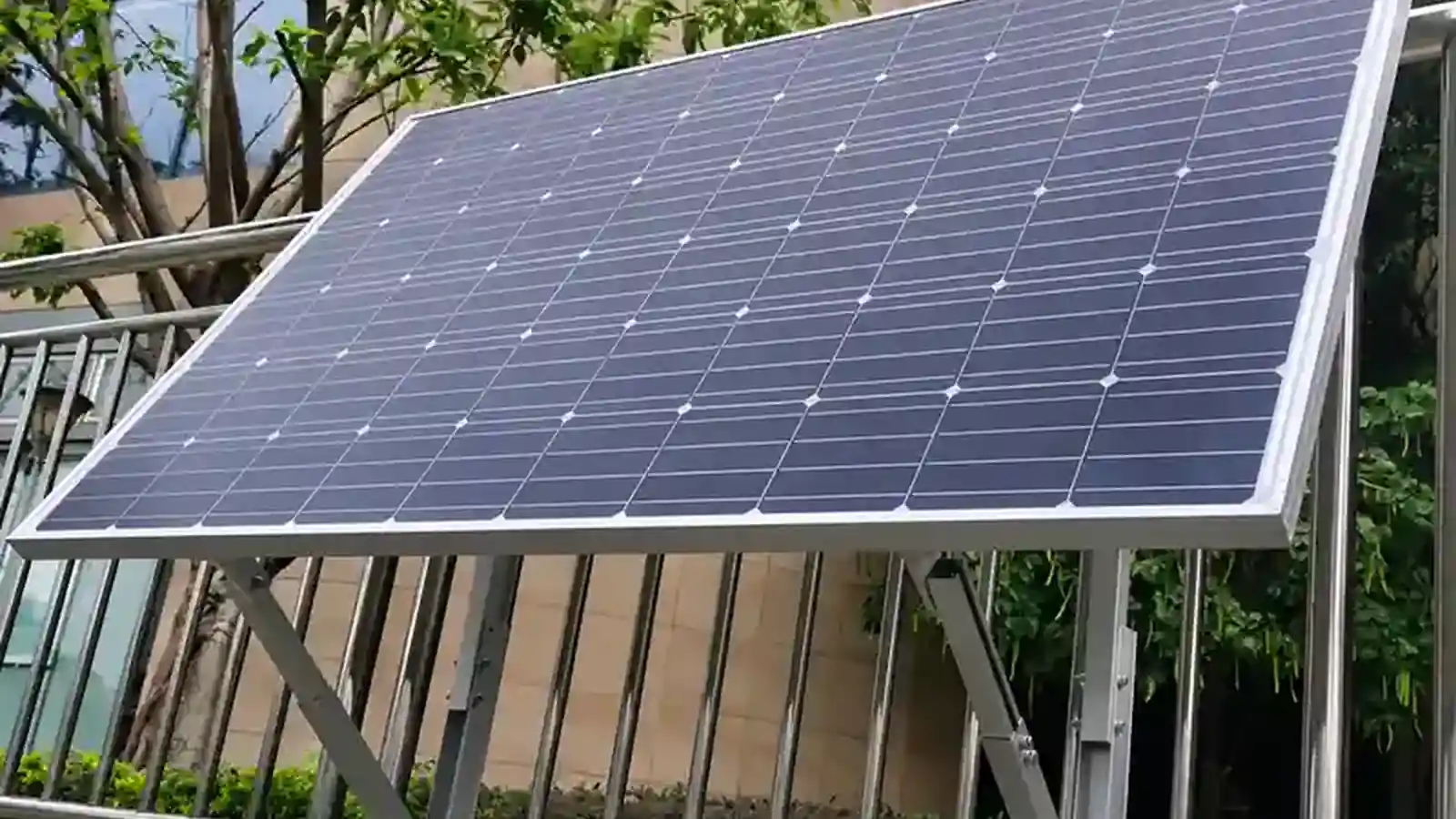
5. Balcony Solar Mounting Systems
Balcony solar systems are smaller, but small size does not eliminate structural requirements.
A balcony mounting system may attach to:
- Railings
- Walls
- Balcony floors
- Other suitable supporting structures
Key inputs include:
- Railing geometry
- Railing material
- Module dimensions
- Module weight
- Wind exposure
- Tilt angle
- Attachment geometry
- Available space
- Secondary safety requirements
The bracket cannot be selected only by matching its width to the railing.
The module, mounting bracket, supporting structure and environmental loads need to be considered as one mechanical system.
Other Specialized Solar Mounting Types
Several additional mounting categories exist outside the most common roof, ground, carport, agrivoltaic and balcony applications.
Pole Mounting
Pole-mounted PV supports a relatively small array on one or a limited number of structural poles.
It can be useful for:
- Remote systems
- Pumps
- Small off-grid installations
- Locations unsuitable for conventional multi-post ground arrays
Façade and Building-Integrated PV
PV can also be attached vertically to façades or integrated directly into the building envelope.
These systems introduce additional requirements related to:
- Building attachment
- Waterproofing
- Ventilation
- Fire performance
- Architectural integration
In-Roof Systems
In-roof systems replace or integrate with part of the roof covering instead of simply mounting modules above it.
They should therefore be evaluated as part of the roof-envelope design rather than as conventional above-roof racking.
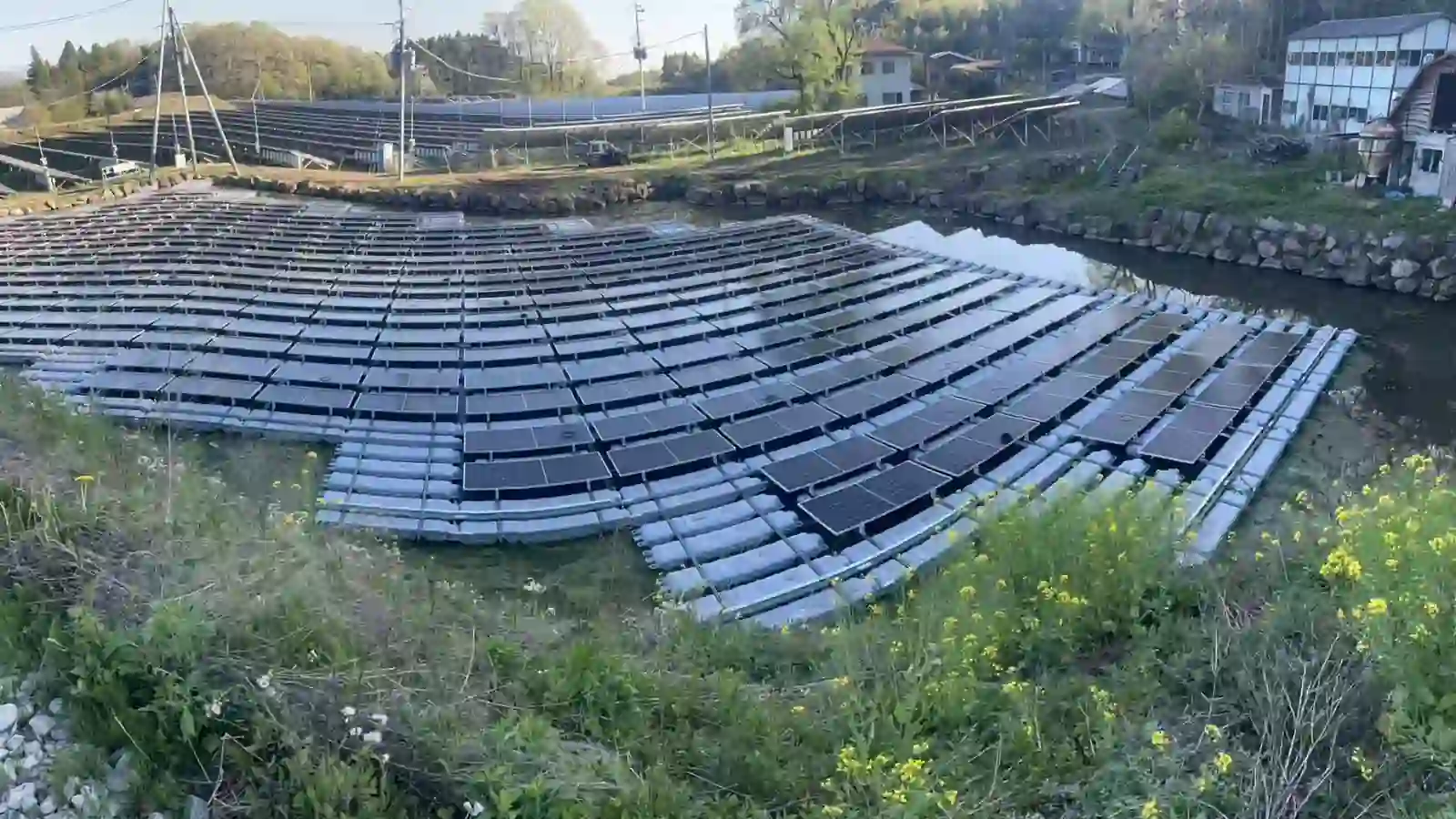
Floating Solar
Floating PV uses buoyant structures on reservoirs, lakes or other water surfaces.
DOE distinguishes floating PV from conventional land-based solar because the structural support, anchoring and site environment are fundamentally different.
Solar Mounting Types Compared
| Factor | Roof | Ground | Carport | Agrivoltaic | Balcony |
|---|---|---|---|---|---|
| Existing structure used | Yes | No | No | No | Usually |
| Dedicated foundation | Usually no | Yes | Yes | Yes | Usually no |
| Roof review | Essential | No | No | No | Sometimes |
| Soil/geotechnical review | No | Often | Often | Often | No |
| Clearance requirement | Low | Project-specific | Vehicle clearance | Agricultural clearance | Application-specific |
| Main structural interface | Roof attachment | Foundation | Foundation + columns | Foundation + elevated frame | Railing/wall/floor |
| Typical major constraint | Roof compatibility | Soil + site geometry | Parking use | Agricultural use | Supporting structure |
| Installation equipment | Roof access equipment | Pile/screw/civil equipment | Often lifting equipment | Ground + agricultural access | Small-scale access |
| Project-specific engineering priority | Attachment + waterproofing | Foundation + layout | Clearance + canopy structure | Clearance + land use | Attachment + wind |
The table should be used as a starting point—not as a final design rule.
How to Choose the Right Solar Mounting System
A practical selection process starts with the installation environment.
If the Project Is on a Roof
Identify:
- Roof type
- Roof profile
- Roof structural member
- Roof slope
- Module layout
- Wind exposure
- Roof load capacity
- Waterproofing requirements
- Penetration restrictions
Then select an attachment and module-support configuration that matches those conditions.
If the Project Is on Open Land
Review:
- Terrain
- Soil or geotechnical conditions
- Project scale
- Module dimensions and layout
- Required tilt
- Wind and snow inputs
- Foundation feasibility
- Row spacing
- Installation equipment
- Maintenance access
Only after these inputs are understood should the project narrow down the structural and foundation options.
If the Project Uses a Parking Area
Evaluate a solar carport.
Start with:
- Parking layout
- Required vehicle clearance
- Column locations
- Structural spans
- Drainage
- Site circulation
Do not simply place a conventional PV ground table over a parking plan.
If the Land Must Remain Agricultural
Evaluate agrivoltaic mounting.
Machine access, crop or livestock use, clearance, row spacing and foundation locations become core design inputs.
If the Available Space Is a Balcony
Start with:
- Supporting structure
- Railing or wall geometry
- Module dimensions and weight
- Connection method
- Wind exposure
- Secondary safety
Wind and Snow Are Design Inputs, Not Product Labels
Solar mounting products are often advertised with generic statements such as a “maximum wind speed” or “maximum snow load.”
Those numbers should not be used as a substitute for project-specific design review.
A rooftop array, low ground-mounted table, elevated carport and high-clearance agrivoltaic structure can experience very different load conditions.
DOE severe-weather guidance emphasizes that racking frames, mechanical attachments, bracing and critical fastened joints need to be designed for site-specific weather risks.
Applicable design values should therefore be established from the project requirements and relevant local standards.
Installation and Maintenance Can Change the Mounting Decision
A structurally workable mounting system must also be practical to transport, install and maintain.
Before final selection, ask:
- Can the required rail lengths be transported to the installation area?
- Can installers safely access the roof?
- Can pile-driving or ground-screw equipment enter the site?
- Is crane access available for a carport?
- Are roads wide enough for project vehicles?
- Does agricultural machinery need to move below or between the arrays?
- Can technicians reach modules and fasteners for future maintenance?
- Can damaged modules or mounting components be replaced without dismantling large sections of the array?
These questions are often ignored in simple product comparisons, but they can materially change the final mounting configuration.
What Information Should Be Prepared Before Mounting Selection?
For a preliminary mounting review, a buyer should prepare as much of the following information as possible:
Basic Project Information
- Country and project location
- Application: roof, ground, carport, agrivoltaic or balcony
- Planned PV capacity
PV Module Information
- Module datasheet
- Module dimensions
- Module frame thickness
- Module quantity
- Portrait or landscape orientation
Site Information
For roof projects:
- Roof type
- Roof profile
- Structural information
- Roof photos or drawings
For ground projects:
- Site plan
- Terrain information
- Soil or geotechnical information where available
- Preferred or possible foundation method
For carport or agrivoltaic projects:
- Required clearances
- Parking or agricultural layout
- Access requirements
Engineering Inputs
- Applicable wind design information
- Snow requirements
- Desired tilt
- Array layout
- Relevant local standards or project specifications
Incomplete project inputs do not necessarily prevent preliminary discussion, but the final mounting configuration should not be treated as confirmed until the required engineering information has been reviewed.
Common Questions About Solar Mounting System Types
What are the main types of solar mounting systems?
The main application categories are roof-mounted systems, ground-mounted systems, solar carports, agrivoltaic systems and balcony mounting systems. Specialized applications include pole, façade, in-roof and floating PV.
What is the difference between fixed-tilt and tracking mounting?
Fixed-tilt structures hold modules at a fixed angle. Tracking structures move the array during the day and therefore add moving components, drives and controls. The choice depends on energy objectives, site conditions, project economics, installer preferences and maintenance strategy.
What is the difference between ballasted and mechanically attached roof mounting?
Ballasted systems use added weight to help resist movement and wind uplift. Mechanically attached systems transfer loads through structural attachment points. Some projects combine both approaches.
Which foundation is best for ground-mounted solar?
There is no universally best foundation. Ground screws, driven piles and concrete foundations should be evaluated according to soil conditions, structural reactions, terrain, corrosion conditions, available construction equipment and local project requirements. But the ground screw foundations and concrete foundations are very commonly used.
Is a solar carport the same as a normal ground-mounted system?
Both use dedicated foundations, but a carport creates an occupied canopy and must coordinate PV design with parking, vehicle clearance, column locations, drainage and public or maintenance access.
How do I know which solar mounting system my project needs?
Start with the installation environment, then review the supporting structure or soil, module dimensions, array layout, wind and snow inputs, tilt, attachment or foundation method, clearance requirements and installation access.
Final Takeaway
The most useful way to think about solar mounting systems is not “Which type is best?” Instead, ask: “Which structural configuration matches this specific site?”
Roof, ground, carport, agrivoltaic and balcony mounting describe the main application categories. The final design still depends on the actual project inputs—including the roof or soil, module layout, tilt, wind and snow requirements, foundations, clearances and construction conditions. That is why two projects in the same mounting category can require very different structural configurations.
Technical References
The following technical and institutional sources were used to support the definitions, engineering considerations, and mounting-system classifications discussed in this guide.
1. U.S. Department of Energy — Life Cycle of Photovoltaic Systems: Install and Commission a Photovoltaic System
Used for structural and site-related considerations for rooftop PV, ground-mounted PV and solar carports, including roof suitability, racking, foundations, vehicle clearance, drainage, maintenance access and severe-weather considerations.
View source
2. U.S. Department of Energy — Solar Photovoltaic System Design Basics
Used for the basic function of PV mounting structures and the distinction between fixed mounting and tracking systems for ground-mounted PV.
View source
3. U.S. Department of Energy — Severe Weather Resilience in Solar Photovoltaic System Design
Used for wind-resilience considerations involving racking frames, mechanical attachments, lateral bracing, foundations and critical fastened joints. It also supports the need for site-specific engineering rather than relying only on generic product wind ratings.
View source
4. Better Buildings Alliance / U.S. Department of Energy — Commercial Rooftop Solar: Frequently Asked Questions
Used for commercial flat-roof mounting concepts, particularly the distinction between ballasted, hybrid-ballasted and mechanically attached racking, and the relationship between ballast, roof structural capacity, penetrations and wind-load requirements.
View source
5. U.S. Department of Energy — Agrivoltaics: Solar and Agriculture Co-Location
Used for the definition of agrivoltaics and the principle of combining photovoltaic generation with continued agricultural activities such as crop production, livestock or pollinator habitat.
View source
6. U.S. Department of Energy — Dual-Use Photovoltaic Technologies
Used for broader dual-use PV classifications, including agrivoltaics and floating photovoltaic systems, and for distinguishing floating PV from conventional land-based mounting applications.
View source
7. National Renewable Energy Laboratory (NREL) — Solar Industry Update
Used as supporting industry data for the adoption and role of fixed-tilt and single-axis tracking systems in utility-scale photovoltaic projects. NREL reported that single-axis tracking had become the dominant mounting type in U.S. utility-scale PV installations by 2021.
View source
8. Japanese Standards Association — JIS C 8955:2017, Load Design Guide on Structures for Photovoltaic Array
Referenced in the historical Easy Solar ground-mounted engineering example. JIS C 8955:2017 provides guidance for calculating design loads for structures supporting photovoltaic arrays installed on the ground or on buildings. The Japanese Standards Association currently lists this 2017 edition as valid.
View source

Sales Manager at Easy Solar Solar Mounting Systems. With over 1o years of experience in the solar industry, I specialize in providing reliable andcost-effective mounting solutions for distributors, installers, and EPC companies. Experienced in intemational sales and commited to building long-term partnerships worldwide.